
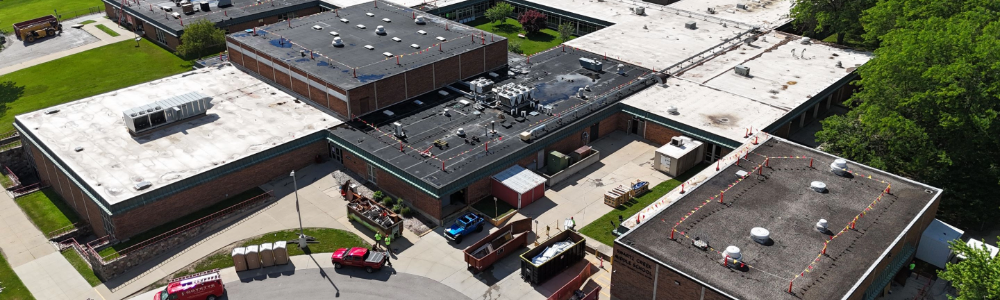
How Can Schools Prevent the Next Roof Leak?
If you are dealing with a schools roof leak, you probably have more questions than just, “How do we stop the water?” You may be wondering why the leak happened, whether another part of the roof could leak next, and how you can protect classrooms, staff, and your maintenance budget.
At Weather Shield Roofing Systems™, we’ve been helping businesses and school districts protect their commercial roofs for over 45 years. One thing we’ve learned is that the best roof leak is the one you prevent before water ever reaches the building.
For schools, prevention is especially important. Snow, ice, rain, wind, freezing temperatures, and temperature swings can all put stress on a commercial roofing system.
The good news is that many school roof leaks give you warning signs before they turn into emergencies.
Why Do School Roofs Leak?
A school roof can be enormous. It may cover classrooms, gymnasiums, offices, cafeterias, mechanical rooms, libraries, and other important spaces.
That means there are a lot of places where problems can develop.
Common causes of commercial roof leaks include:
- Aging roofing materials
- Damaged seams or flashing
- Clogged roof drains
- Ponding water
- Damage around HVAC equipment and roof penetrations
- Loose or damaged roofing materials
- Ice and snow-related damage
- Foot traffic from contractors or maintenance crews
- Previous repairs that are beginning to fail
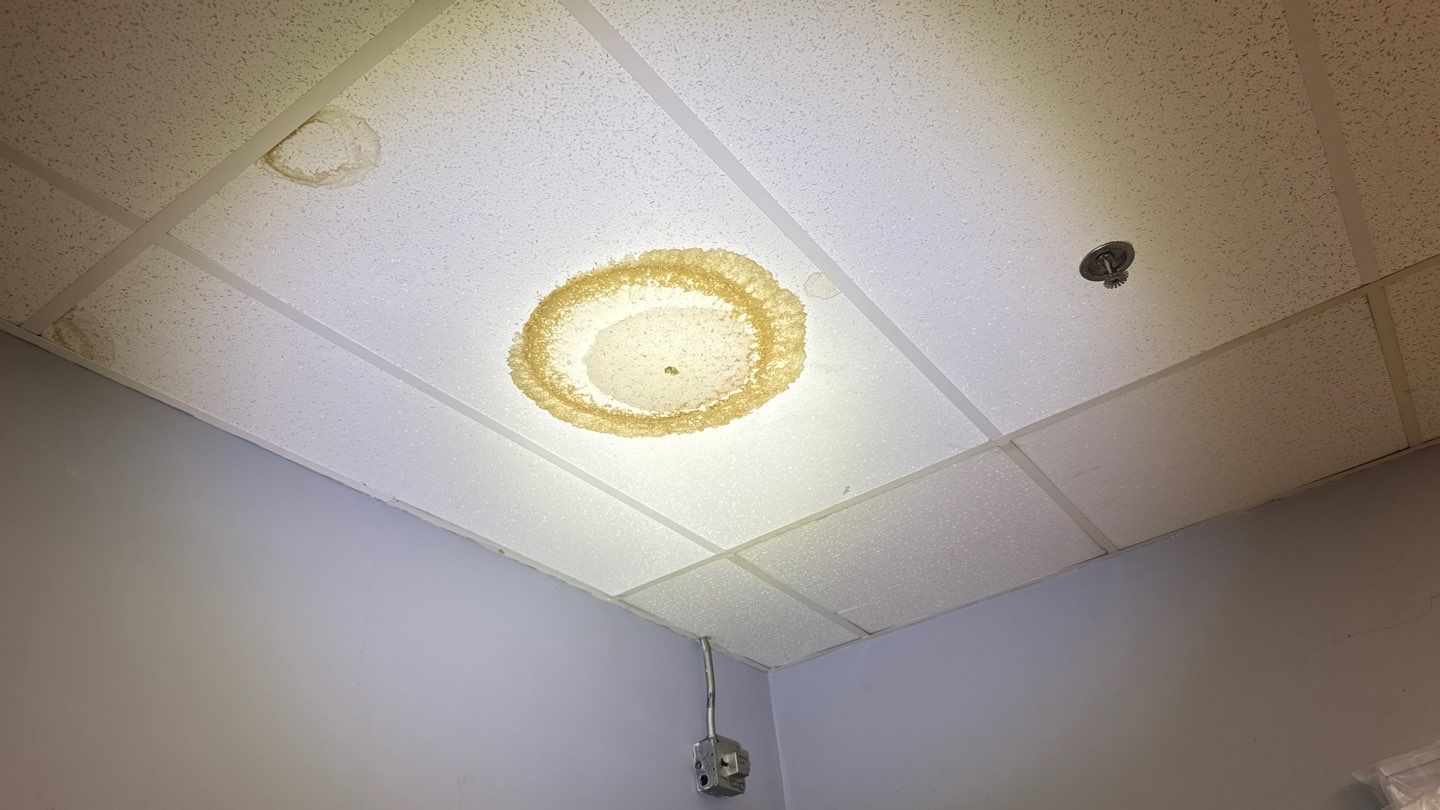
Sometimes the leak showing up inside a classroom is not directly below the actual roof problem. Water can travel along insulation, decking, pipes, or structural components before finally dripping into the building.
That is why finding and repairing commercial roof leaks often requires more than simply looking above the ceiling stain.
How Can Schools Find Roof Problems Before They Leak?
One of the best ways to prevent a roof leak is surprisingly simple: inspect the roof regularly.
A professional commercial roof inspection can identify small problems before they allow water into the building.
Think about it like maintaining a school bus.
You would not normally wait for the engine to fail before checking the oil, brakes, or tires. Regular maintenance helps find problems early and keeps the vehicle operating longer.
Your commercial roofing system deserves the same approach.
During a roof inspection, a roofing professional may look for damaged membranes, deteriorated flashing, open seams, drainage problems, punctures, loose materials, and other warning signs.
Catching a small roofing problem today may prevent an emergency roof repair later.
How Often Should a School Roof Be Inspected?
The right inspection schedule depends on the roof’s age, condition, roofing system, and maintenance history.
In general, regular inspections are especially valuable before and after the harshest weather seasons.
A school may also want an additional roof inspection after a major storm, high winds, heavy snowfall, construction project, or significant rooftop work.
Why inspect after other contractors have been on the roof?
Because HVAC technicians, electricians, construction crews, and other trades may need to walk across the roofing system. Tools can be dropped. Membranes can be punctured. Access panels and flashing can be disturbed.
Nobody has to do anything intentionally wrong for roof damage to occur.
Finding that damage quickly can mean the difference between a minor roof repair and water entering a classroom months later.
Can Roof Maintenance Really Prevent Leaks?
Yes, although no maintenance program can guarantee that a roof will never leak.
Preventive roof maintenance is about reducing risk.
During routine commercial roof maintenance, small issues can often be addressed before they become larger problems. That might include correcting minor membrane damage, addressing vulnerable flashing, clearing drainage areas, or monitoring sections of the roof that are showing signs of age.
This approach can help schools avoid the expensive cycle of waiting for a leak, calling for emergency roof repair, fixing interior damage, and then repeating the process somewhere else.
A proactive roof maintenance plan—like Max Life™ Roof Care—gives the facilities team a better understanding of what is happening across the entire roofing system.
Why Are Roof Drains So Important for Schools?
Water needs somewhere to go.
When drains, gutters, or scuppers become clogged with leaves, debris, ice, or other materials, water can remain on the roof longer than it should.
That can create ponding water and put additional stress on vulnerable areas of the roofing system.
In Michigan and Tennessee, snow can accumulate and eventually melt. Temperatures can rise and fall quickly. Water may freeze, thaw, and freeze again.
Keeping drainage systems clear is a simple but important part of roof damage prevention.
School maintenance teams can also watch for water that remains on the roof well after rainfall or snowmelt. Persistent ponding water should be evaluated rather than ignored.
What Warning Signs Should School Facility Managers Watch For?
You do not have to be a commercial roofing expert to notice that something has changed.
Facility teams should pay attention to water stains on ceiling tiles, unusual odors, damp insulation, bubbling paint, wet walls, dripping water, or unexplained moisture.
Changes on the roof matter too.
Visible membrane damage, standing water, loose materials, damaged flashing, or debris around drainage areas can all be reasons to schedule a professional roof inspection.
One of the biggest mistakes is assuming that a small leak is a small roofing problem.
It might be.
But the visible water is only one symptom. Moisture may already have entered insulation or other parts of the roofing assembly.
Finding the source quickly helps limit additional damage.
Should Schools Repair or Replace a Leaking Roof?
A roof leak does not automatically mean your school needs a roof replacement.
That distinction can make a major difference in a school district’s capital budget.
If the roofing system is generally in good condition and the problem is isolated, a targeted repair may be the most cost-efficient option.
If the roof has widespread deterioration, recurring leaks, saturated insulation, or is approaching the end of its useful life, a larger restoration or replacement project may need to be considered.
The important part is making that decision based on the actual condition of the roof.
A good commercial roofing partner should be willing to tell you when a repair makes sense and when continuing to repair an aging roof may be costing you more in the long run.
Can Preventive Maintenance Extend a School Roof’s Lifespan?
It can.
Every commercial roof has a limited service life, but how the roof is maintained can influence how effectively you use that investment.
Ignoring small problems allows moisture and deterioration to spread. Addressing them early can help protect the roofing system and potentially postpone larger capital expenses.
This is the idea behind our Max Life™ Roof Care approach.
Instead of treating the roof as something that only gets attention when it leaks, the goal is to actively manage the roof throughout its service life.
For schools managing multiple buildings, this approach can also help prioritize roof spending.
You may discover that Building A needs immediate attention while Building B has several years of useful life remaining. That information can help administrators plan budgets rather than being surprised by emergency expenses.
How Can Schools Reduce Emergency Roof Repair Costs?
Start by knowing the condition of your roofs.
A school district with several buildings should ideally have a clear picture of each roof’s age, condition, repair history, known problem areas, and expected future needs.
That information makes roof investment protection much easier.
Instead of reacting to whichever roof leaks next, administrators can make informed decisions about where maintenance dollars and capital funds should go.
It also helps to keep roof access controlled.
When contractors need rooftop access, document who was on the roof and what work they performed. If possible, have vulnerable areas inspected after major mechanical or construction work.
Small steps like these can contribute to significant roof cost savings over time.
What Should a School Do Before the Next Storm?
Do not wait for water to start dripping into a classroom.
If you are unsure about the condition of your school’s commercial roof, schedule an inspection and establish a baseline. Find out which areas are performing well, which need maintenance, and which may require larger investments in the coming years.
Then create a plan.
A proactive plan could include scheduled roof inspections, preventive maintenance, drainage checks, documentation of repairs, controlled roof access, and budgeting for future roofing needs.
That gives your facilities team something much more valuable than another emergency repair: information.
Weather will always be unpredictable. Your school’s approach to commercial roofing does not have to be.
At Weather Shield Roofing Systems™, our goal is to help schools and other commercial property owners make informed, cost-efficient roofing decisions. For more than 45 years, we have focused on helping organizations identify problems early, prevent unnecessary roof damage, and get as much useful life as possible from their roofing investments.
If you are concerned about preventing the next leak at your school, talk with our team about your roof’s current condition and the steps you can take to protect it.
Contact Weather Shield Roofing Systems to discuss your school’s roof.

Andrew Schmidt
Account Executive
Andrew Schmidt brings 25 years of leadership experience in education—including as Deputy Superintendent for Flushing Schools—to his role at Weather Shield Roofing Systems. With a strong background in facilities management, he understands the importance of reliable, well-maintained roofs. Now, he helps building owners find practical, cost-effective roofing solutions, focusing on extending roof life and supporting Weather Shield’s mission: We Stop Roof Leaks!