
How Do You Maintain a Commercial Roof in Pensacola?
If you manage a commercial building in Pensacola, your roof has a difficult job.
It has to handle strong sun, heavy rain, high humidity, salt in the air, wind-driven storms, and hurricane season. At the same time, it protects your employees, tenants, equipment, inventory, electrical systems, and daily operations.
That is a lot to ask from something most people rarely look at.
After more than 45 years of helping commercial property owners protect their buildings, Weather Shield Roofing Systems™ has seen the same pattern again and again: small roofing problems are usually manageable. Ignored roofing problems are usually expensive.
The best way to avoid surprise leaks and premature roof replacement is to follow a consistent commercial roof maintenance plan. That means inspecting the roof regularly, keeping drainage systems clear, documenting changes, and fixing minor damage before water gets inside.
What Does Commercial Roof Maintenance Include?
Commercial roof maintenance is the ongoing process of inspecting, cleaning, documenting, and repairing a roofing system.
It is not just someone walking around the roof once a year and saying, “Looks good from here.”
A useful maintenance plan should include:
- Regular professional roof inspections
- Drain, gutter, and scupper cleaning
- Seam and flashing checks
- Inspections around rooftop equipment
- Minor repairs completed before they spread
- Written reports and dated photographs
- Additional inspections after major storms or rooftop work
The exact work depends on the roof system. TPO, PVC, EPDM, metal roofing, modified bitumen, coatings, and built-up roofs all age differently. However, the goal remains the same: find trouble while the repair is still small.
How Often Should a Commercial Roof Be Inspected?
Most commercial roofs should be professionally inspected at least twice a year.
For Pensacola properties, it often makes sense to schedule one inspection before the most active part of hurricane season and another after the summer heat and storm activity have passed.
You should also schedule an inspection after:
- Hurricanes or tropical storms
- Hail or unusually strong winds
- Wind-driven rain events
- HVAC replacement or repair work
- Solar panel or satellite installation
- Plumbing or electrical work on the roof
- Any event that creates heavy rooftop foot traffic
Older roofs and buildings with a history of leaks may need quarterly inspections. Facilities such as medical offices, restaurants, warehouses, schools, retail centers, and multi-tenant buildings may also benefit from more frequent checks because even a small leak can interrupt operations.
What Should You Look for During a Commercial Roof Inspection?
A complete commercial roof inspection should cover the roof surface, seams, flashing, drainage systems, roof edges, penetrations, and the interior of the building.
Property managers can watch for basic warning signs between professional visits, but technical repairs should be handled by a qualified commercial roofing contractor.
Ponding Water and Drainage Problems
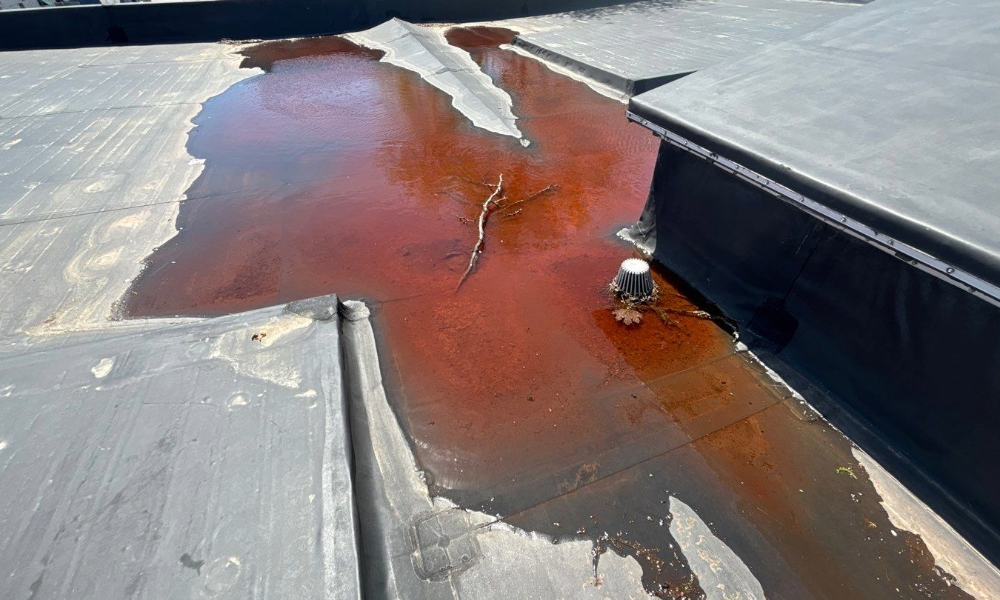
Standing water is one of the clearest signs that a commercial roof needs attention.
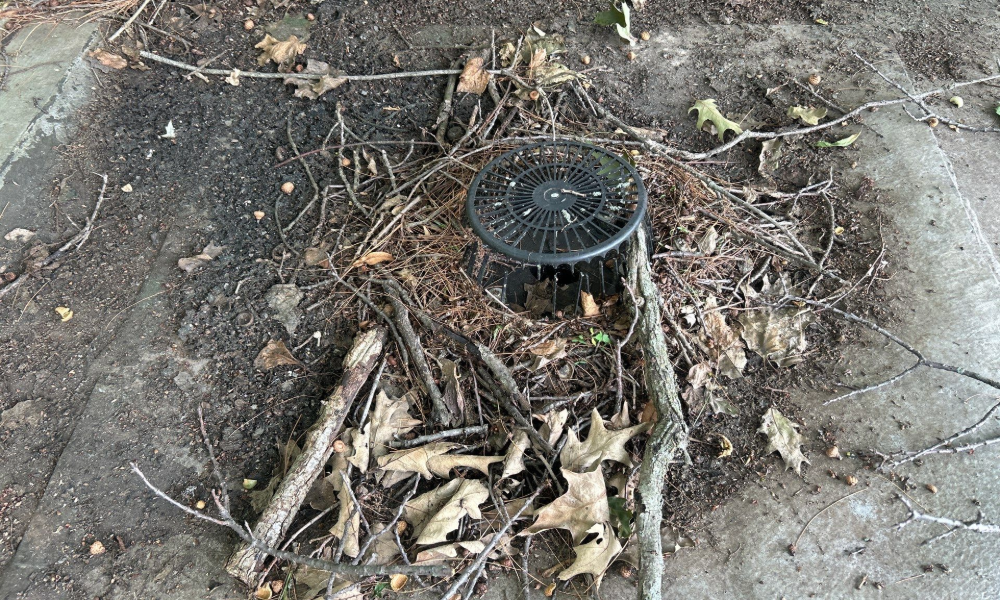
After heavy rain, check whether water is collecting around drains, scuppers, gutters, or low areas. Water that remains on the roof can speed up membrane deterioration, add unnecessary weight, and eventually find its way through weak seams or flashing.
Look for:
- Clogged drains or gutters
- Leaves, pine needles, or debris
- Missing drain strainers
- Overflowing scuppers
- Loose downspout connections
- Water stains on exterior walls
- Areas where water repeatedly collects
A flat commercial roof is not supposed to work like a swimming pool. Water should move toward a drain and leave the roof.
Cracks, Punctures, and Open Seams
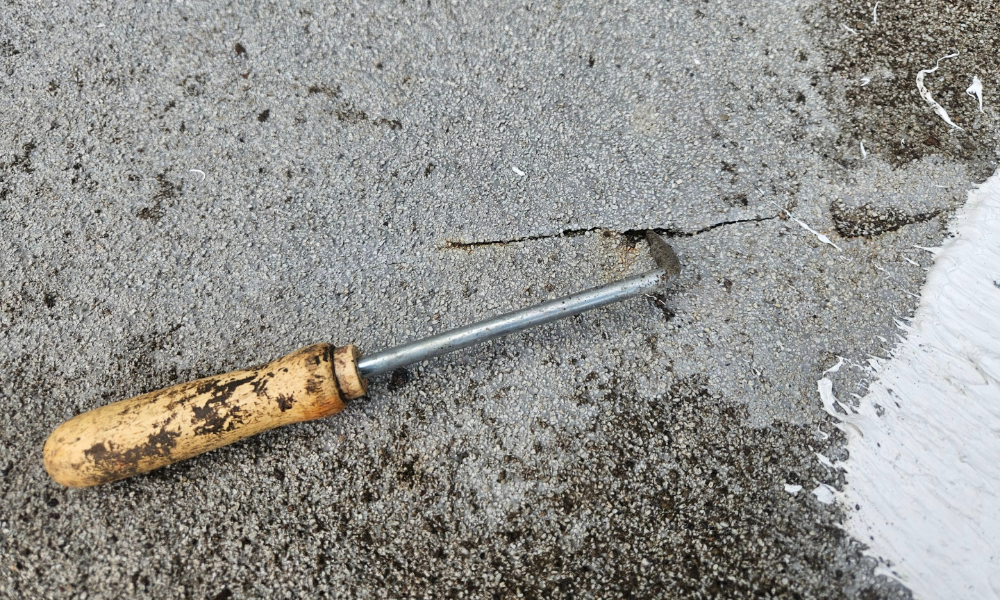
Commercial roof membranes can be damaged by dropped tools, foot traffic, windblown debris, sharp equipment panels, and normal aging.
Common warning signs include:
- Tears or punctures
- Open seams
- Blisters or bubbles
- Wrinkles or loose membrane
- Cracked patches
- Exposed reinforcement fabric
- Missing surface granules
- Soft or uneven areas
These problems do not always cause an immediate leak. That is what makes them easy to ignore. But once rainwater gets below the surface, it may soak the insulation and travel before it appears inside.
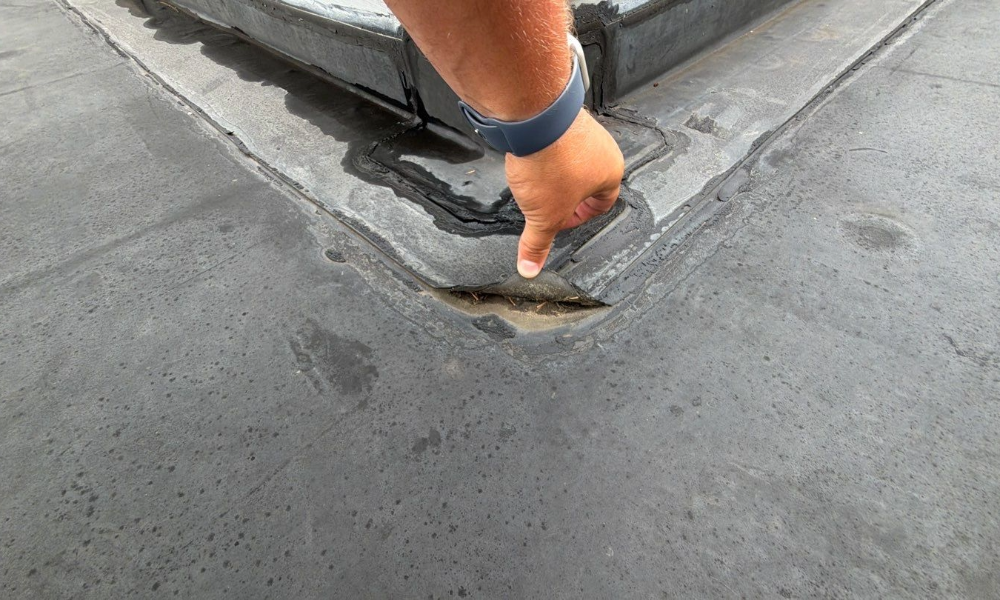
Flashing, Edges, and Roof Corners
Many commercial roof leaks begin where one roofing material meets another.
Flashing is used around walls, curbs, vents, pipes, and roof edges to help keep water out. These areas also move as temperatures change, which makes them common failure points.
Check for:
- Cracked or missing sealant
- Loose coping caps
- Lifted membrane edges
- Gaps near parapet walls
- Damaged termination bars
- Loose counterflashing
- Separation around expansion joints
- Signs of wind uplift
Corners and perimeter edges deserve extra attention in coastal areas because strong winds often place the greatest pressure on these parts of the roof.
Rooftop Equipment and Penetrations
HVAC units, exhaust fans, vents, skylights, pipes, conduit, and satellite equipment all create openings in the roofing system.
Look for:
- Cracked pipe boots
- Failed sealant
- Loose equipment curbs
- Rust around mechanical units
- Open gaps around conduit
- Damaged pitch pockets
- Condensation lines draining onto the roof
- Screws, sheet metal, or debris left by service crews
Other trades can accidentally damage a roof without realizing it. That is why rooftop access should be controlled and documented.
What Are the Interior Warning Signs of a Roof Problem?
Sometimes the first visible warning appears inside the building.
Train employees and maintenance staff to report:
- Ceiling stains
- Dripping water
- Musty odors
- Bubbling paint
- Damp insulation
- Rust on ceiling grids
- Warped walls or flooring
- Mold-like growth
- Water near electrical equipment
Record the date, exact location, weather conditions, and photographs whenever a problem is reported. Water can travel along structural components, pipes, or insulation, so the place where it drips may not be directly below the roof damage.
Good notes help the roofing contractor find the source faster.
How Should You Prepare a Commercial Roof for Hurricane Season?
Commercial roof maintenance cannot make a building hurricane-proof. Anyone who promises that is selling something the weather has not agreed to.
Maintenance can, however, reduce preventable weaknesses.
Before a tropical storm or hurricane approaches:
- Clear drains and overflow paths
- Remove loose tools, materials, and debris
- Secure roof hatches and access doors
- Check rooftop equipment panels
- Look for loose edge metal or coping
- Photograph roof conditions when it is safe
- Confirm emergency contact information
Do not send employees onto the roof once weather conditions become unsafe.
After the storm, schedule a professional inspection when the building has experienced strong winds, flying debris, hail, or prolonged wind-driven rain. A roof may have lifted seams, punctures, or hidden moisture even when no water is dripping inside yet.
Why is Roof Maintenance Documentation Important?
Roof maintenance records are not exciting, but neither is arguing about a warranty or insurance claim without them.
Create a digital roof file that includes:
- Roof type and installation date
- Warranty information
- Inspection reports
- Repair invoices
- Before-and-after photographs
- Storm damage notes
- Leak reports
- Rooftop access records
- Roof drawings or maps
- Manufacturer maintenance requirements
- For every inspection, record who inspected the roof, what was found, what repairs were recommended, and when those repairs were completed.
If emergency work is needed after a storm, photograph the damage before and after temporary repairs. Keep receipts and service reports. Clear documentation helps show the condition of the roof and the steps taken to prevent further damage.
What Can Building Owners Safely Do Between Inspections?
Property managers and maintenance teams can support the roof maintenance program without attempting technical repairs.
They can:
- Limit access to authorized personnel
- Watch for ceiling stains
- Report ponding water
- Keep records of rooftop service visits
- Remove light debris when conditions are safe
- Photograph visible concerns from safe locations
- Schedule repairs promptly
Avoid pressure washing the roof, cutting roofing materials, walking on damaged areas, or applying hardware-store sealant as a permanent fix.
A tube of sealant may make a leak look solved for a few weeks. It may also trap water, interfere with proper repairs, or affect warranty coverage. The roof usually keeps score.
When Should You Call a Commercial Roofing Contractor?
Contact a commercial roofing professional when you notice:
- Active or recurring leaks
- Standing water that does not drain
- Torn membrane or open seams
- Loose flashing or edge metal
- Soft spots or sagging areas
- Rusted roof panels or fasteners
- Damaged drains or scuppers
- Storm or hail damage
- Musty odors or suspected wet insulation
- A roof nearing the end of its service life
You should also call when you are unsure. A professional inspection is often less expensive than guessing wrong.
How Do You Build a Simple Commercial Roof Maintenance Plan?
A useful maintenance plan does not need to be complicated.
Start with these steps:
- Identify the roof system and approximate installation date.
- Gather warranties, reports, invoices, and photographs.
- Schedule at least two professional inspections each year.
- Add post-storm inspections when needed.
- Keep drains and water paths clear.
- Control and document rooftop access.
- Complete recommended repairs promptly.
- Review the roof condition and budget each year.
This turns roof care from a series of emergencies into a manageable part of property planning.
The Bottom Line
Commercial roof maintenance in Pensacola is not about making a roof last forever. Nothing exposed to Gulf Coast weather gets that deal.
It is about helping the roof last as long as reasonably possible while reducing leaks, emergency repairs, interior damage, and avoidable replacement costs.
Inspect the roof regularly. Keep the water moving. Document what you find. Fix small problems while they are still small.
Weather Shield Roofing Systems™ helps commercial property owners take a practical, transparent approach to roof maintenance through inspections, repairs, planning, and Max Life™ Roof Care. The goal is not to sell you work you do not need. It is to help you understand the condition of your roof and make a responsible decision about what comes next.
To discuss your commercial roof or schedule an evaluation, contact Weather Shield Roofing Systems™.

Michelle Boykin
Michelle Boykin is the Branch Manager for Weather Shield Roofing Systems in Florida. She has over 17 years of commercial roofing experience, with a focus on building strong teams, creating scalable processes, and providing excellent customer service. As Past Chair of National Women in Roofing and current board member of the National Roofing Contractors Association, she collaborates with industry leaders to encourage professionalism in the Roofing Industry.