How Do You Replace a Commercial Roof Over Active Equipment Without Shutting It Down?
When you’re running a 24/7 operation, shutting down for a commercial roof replacement isn’t always an option. That’s exactly the situation Michigan Sugar in Bay City, MI faced. This is also a question we hear often: Can you really replace a roof over active equipment without interrupting operations?
At Weather Shield Roofing Systems, we’ve been helping commercial facilities tackle difficult roofing challenges like this for over 45 years. We can confidently say: yes, it can be done. But it takes careful planning, high-level safety coordination, and a seasoned team that knows how to navigate complex conditions.
Let’s walk you through what made this job one of our most difficult Level 3 projects and how our team pulled it off safely and successfully.
What Made the Michigan Sugar Roofing Project So Challenging?
The roof at Michigan Sugar’s Bay City facility wasn’t just worn out. It needed a full replacement, including the roof deck. And here’s the kicker: the entire project had to be done directly over sensitive equipment that could not be shut down.
That means no room for error. Every step of the roof replacement had to be done with full consideration of the live operations happening below: machinery running, people working, and production continuing.
To make matters even more complex, we were working on a job site with serious Michigan OSHA-related concerns. Undoubtedly safety wasn’t just a priority; it was a constant, daily responsibility that required active management and communication with plant supervisors.


How Do You Ensure Safety on a Roof Replacement with Active Operations Below?
This wasn’t your average commercial roofing job. We had to treat every phase of the project like a high-risk operation. Here’s what that looked like day-to-day:
PPE Inspections Every Morning
First, before anyone stepped foot on the roof, our team ran full inspections of personal protective equipment (PPE). Hard hats, harnesses, gloves—you name it. No one worked unless they were fully compliant.
Daily Coordination with Plant Supervisors
Every day started with a check-in. We worked closely with the plant supervisors to confirm an up-to-date list of attendees, and identify access points. This allowed our team to adjust to any operational changes inside the plant.
Hot Work Permits for Every Metal Cut
Any time we needed to perform hot work, especially metal cutting, we had a lot of prep work before we could start cutting. We had to request permits, coordinate safety personnel, and ensure all fire prevention protocols were in place. This wasn’t optional. It was required for every instance.
Visibility and Lighting Challenges
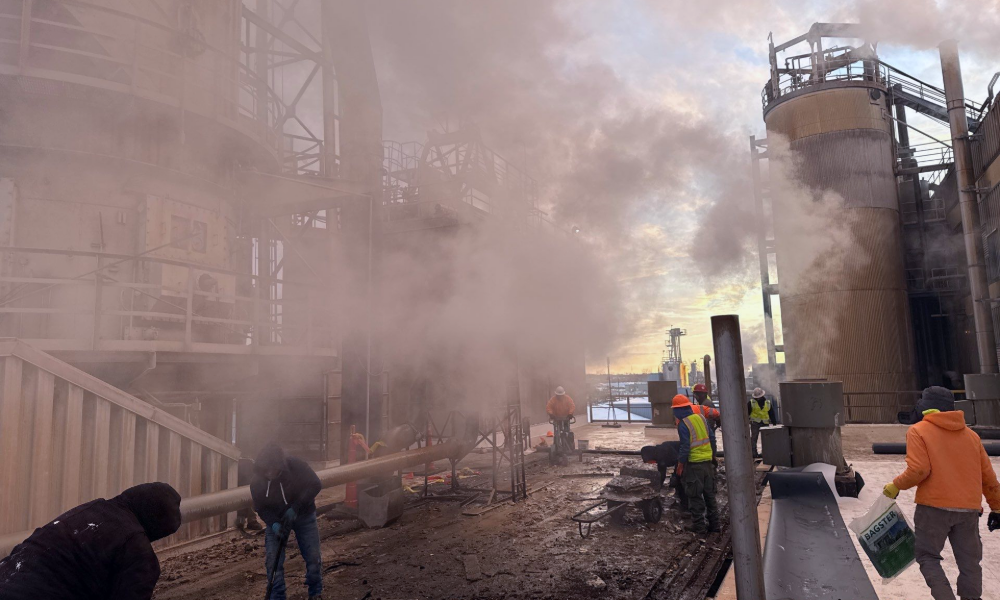
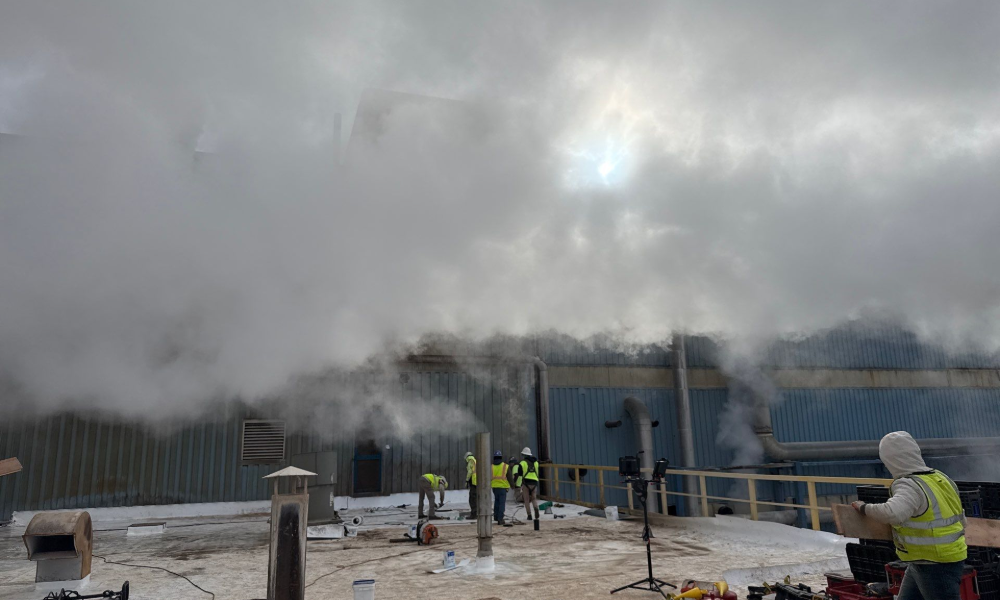
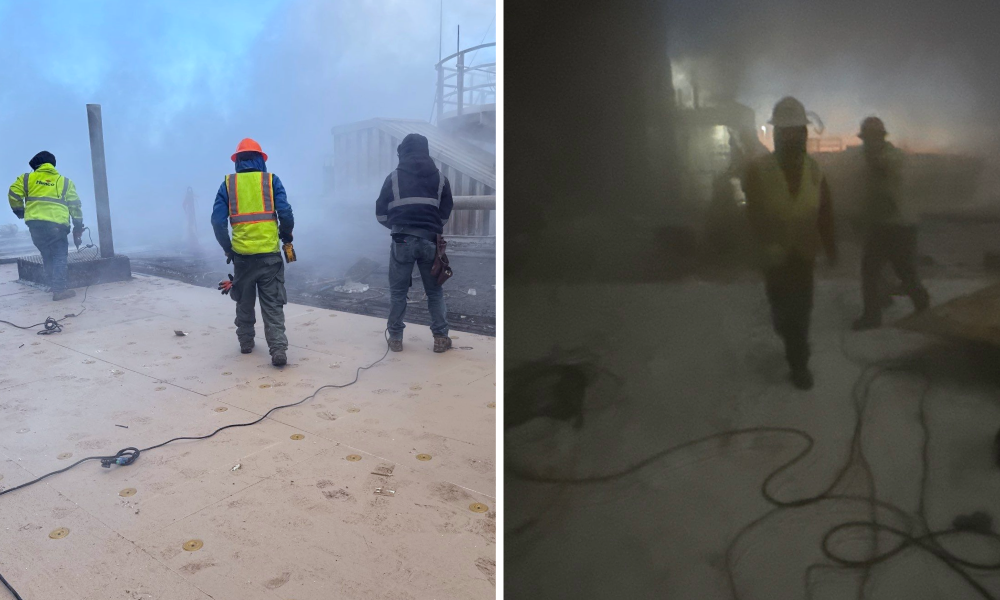
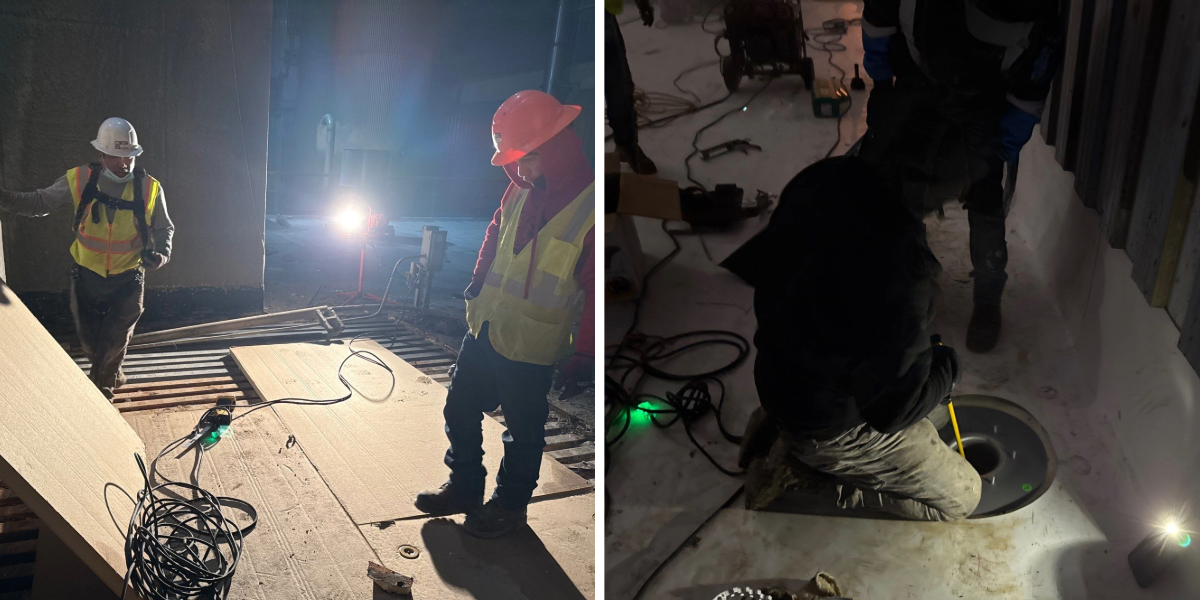
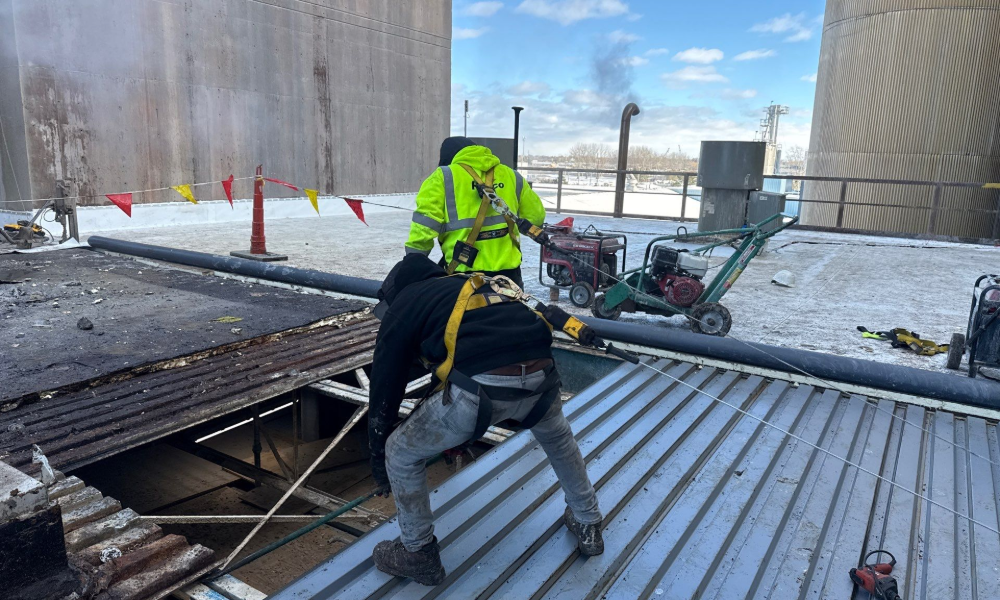
Additionally, the roof itself brought its own issues. We were often working in poor visibility, with tight access, high traffic on the roof, and difficult lighting conditions that made precision and safety even harder to maintain.
Despite these difficult conditions, our team still delivered outstanding results. Check out some photos of the tough working conditions below:
How Do You Replace a Roof Deck Without Shutting Down a Facility?
Replacing a commercial roof deck is a major operation under the best circumstances. Doing it over a live facility? That takes next-level planning.
We used a phased approach to make it work:
Section-by-Section Work Zones
We divided the roof into small work zones to isolate sections safely without exposing the entire interior to the elements or falling debris.
Temporary Safety Systems
Netting, barriers, and containment systems were used to prevent tools, debris, or roofing materials from interfering with sensitive equipment or posing a hazard to employees working below.
Noise and Vibration Management
We carefully scheduled noisy or high-impact work during off-peak times to avoid disrupting operations and minimize the risk of damage or interference.
Experienced Crew Only
Only seasoned professionals with experience in high-risk commercial roofing situations were assigned to this job. Everyone on-site had to be skilled, focused, and safety-certified.
Why Choose a Roofing Partner Who’s Comfortable With Complex Projects?
If your facility can’t afford downtime, or your roofing system is integrated with sensitive operations below, you can’t afford to bring in just any contractor.
Michigan Sugar’s Bay City project proves that with the right experience and planning, even the most difficult roofing challenges can be solved. But it requires:
Deep knowledge of commercial roof replacement
Strong relationships with site supervisors and plant management
Commitment to OSHA compliance and safety management
Willingness to go the extra mile—every single day
At Weather Shield Roofing Systems, we pride ourselves on being that partner. Our team handled this Level 3 project with professionalism, precision, and respect for the operational needs of our client.
Can You Prevent Disruptions During a Roof Replacement?
Absolutely. We specialize in minimizing disruption. By using careful scheduling, effective communication, and our trusted Max Life Roof Care system, we help facility teams actively avoid unplanned shutdowns and costly delays.
When a facility can’t pause operations—like in this case—we apply every tool and technique we’ve mastered over 45 years to keep things running without interruption. At the same time, we deliver a high-quality roof built to last for decades.
No matter how complex the project gets, we stay focused on one goal: delivering transparent, cost-efficient solutions that protect your building, equipment, and people.
If you’re dealing with a tough roofing challenge—especially one that seems impossible without halting operations—let’s connect. We’ll find a way forward that keeps your business moving.


Jeff Vander Hart
Jeff is an executive leader with over 25 years of experience in the building materials, construction, and commercial roofing industries. As Vice President of Operations at Weather Shield Roofing Systems™, he is known for strengthening culture, scaling branch performance, and developing high-performing teams. His career progression—from Project Manager to Director roles and now VP—reflects a track record of delivering results through people-focused, process-driven leadership.