How Does Ongoing Roofing Training Benefit Our Customers?
When you trust someone with your commercial roof, you want to know the people working on it truly understand the latest materials, building codes, and installation techniques. That is a fair expectation. At Weather Shield Roofing Systems, we have been helping businesses protect their properties for over 45 years, and one of the ways we continue delivering reliable commercial roofing solutions is through ongoing training for our team.
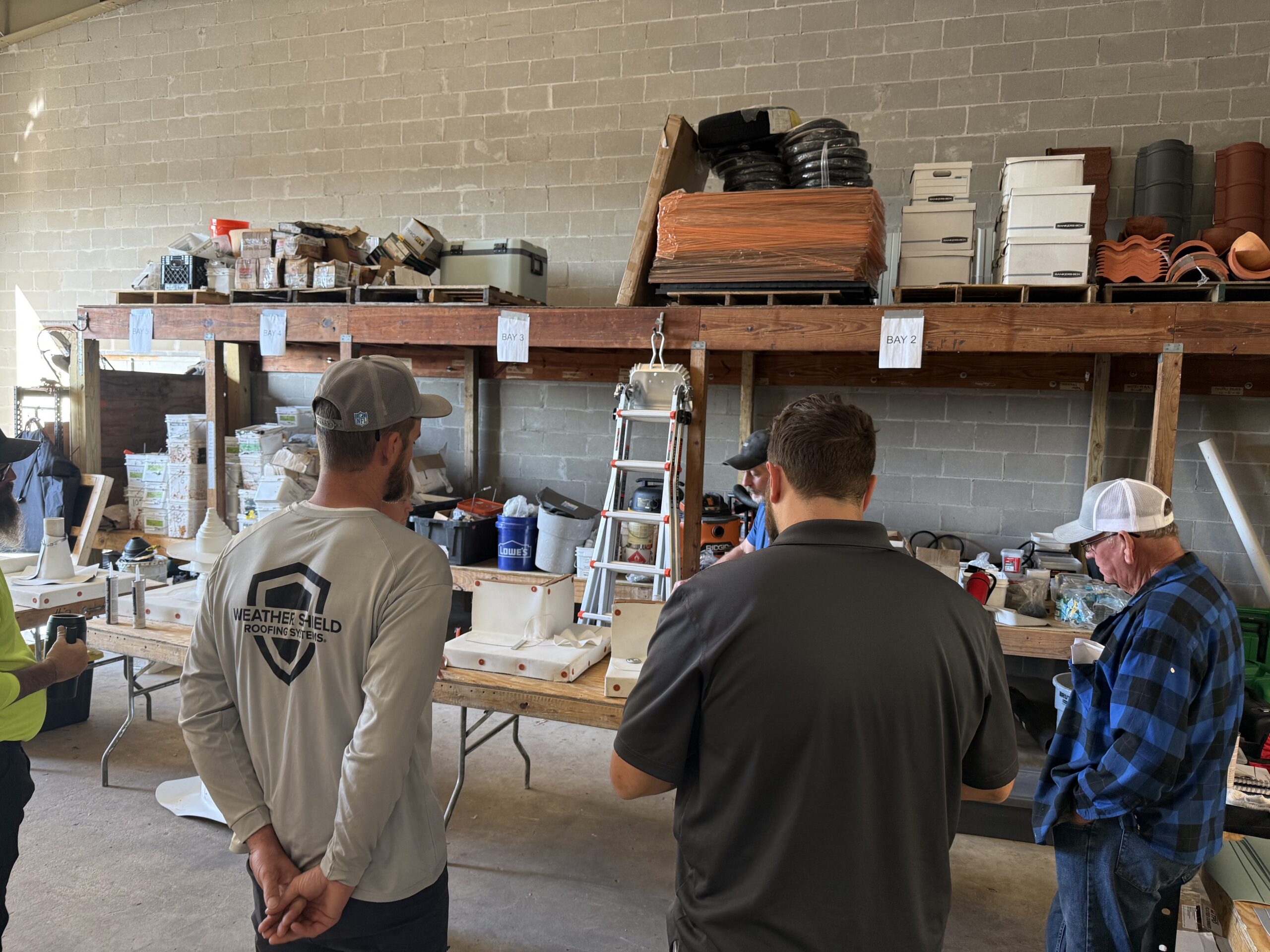
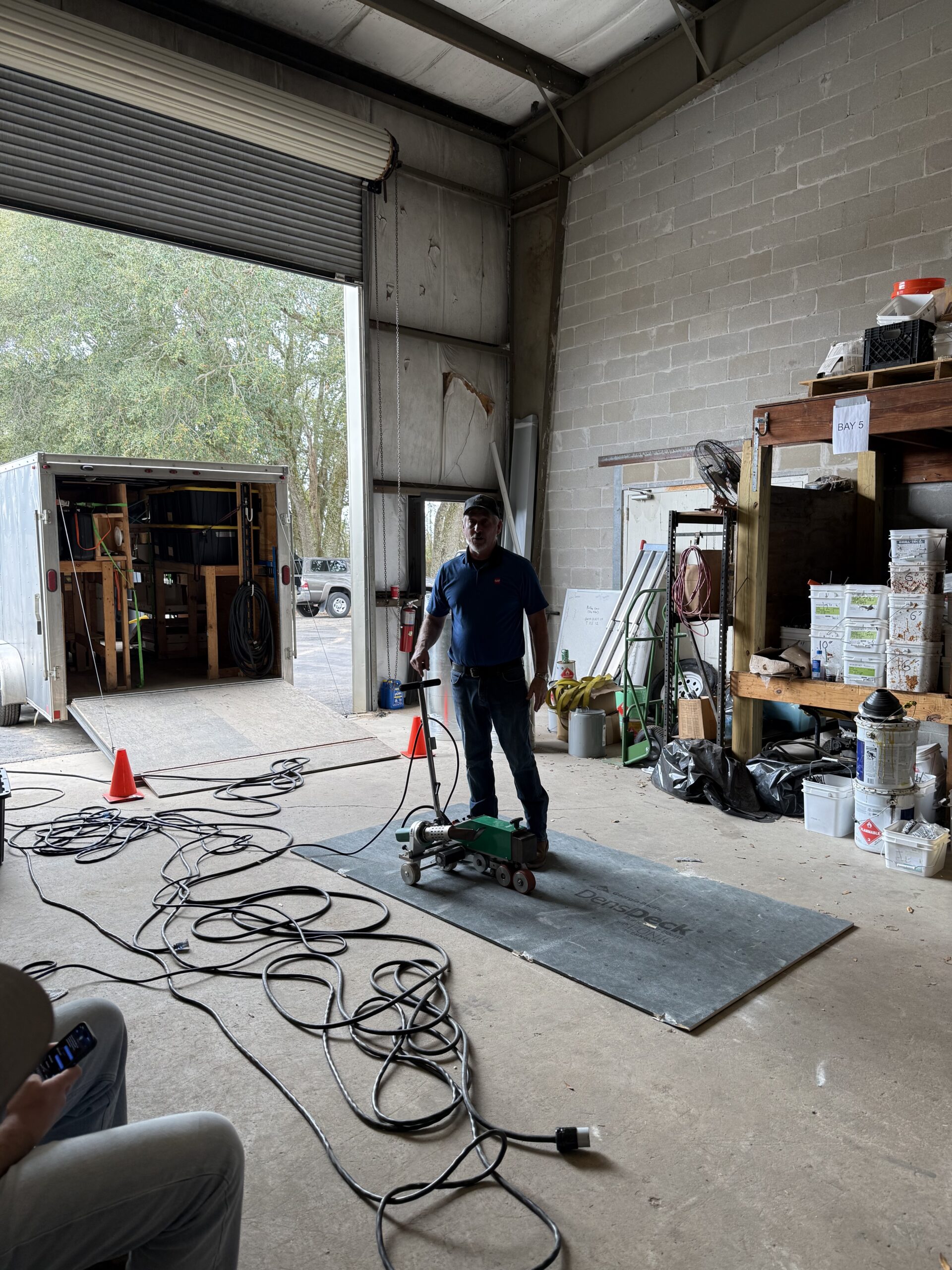
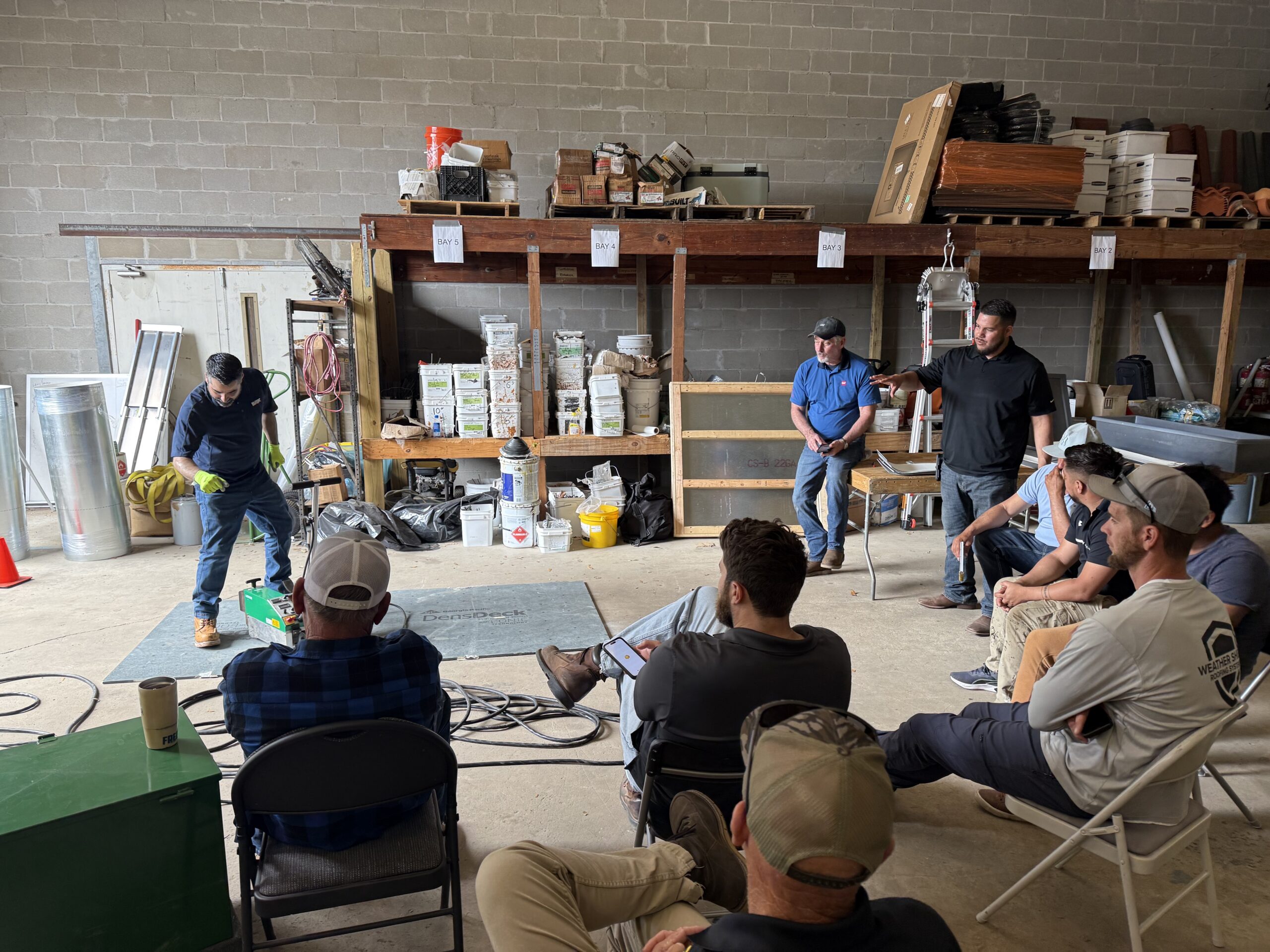
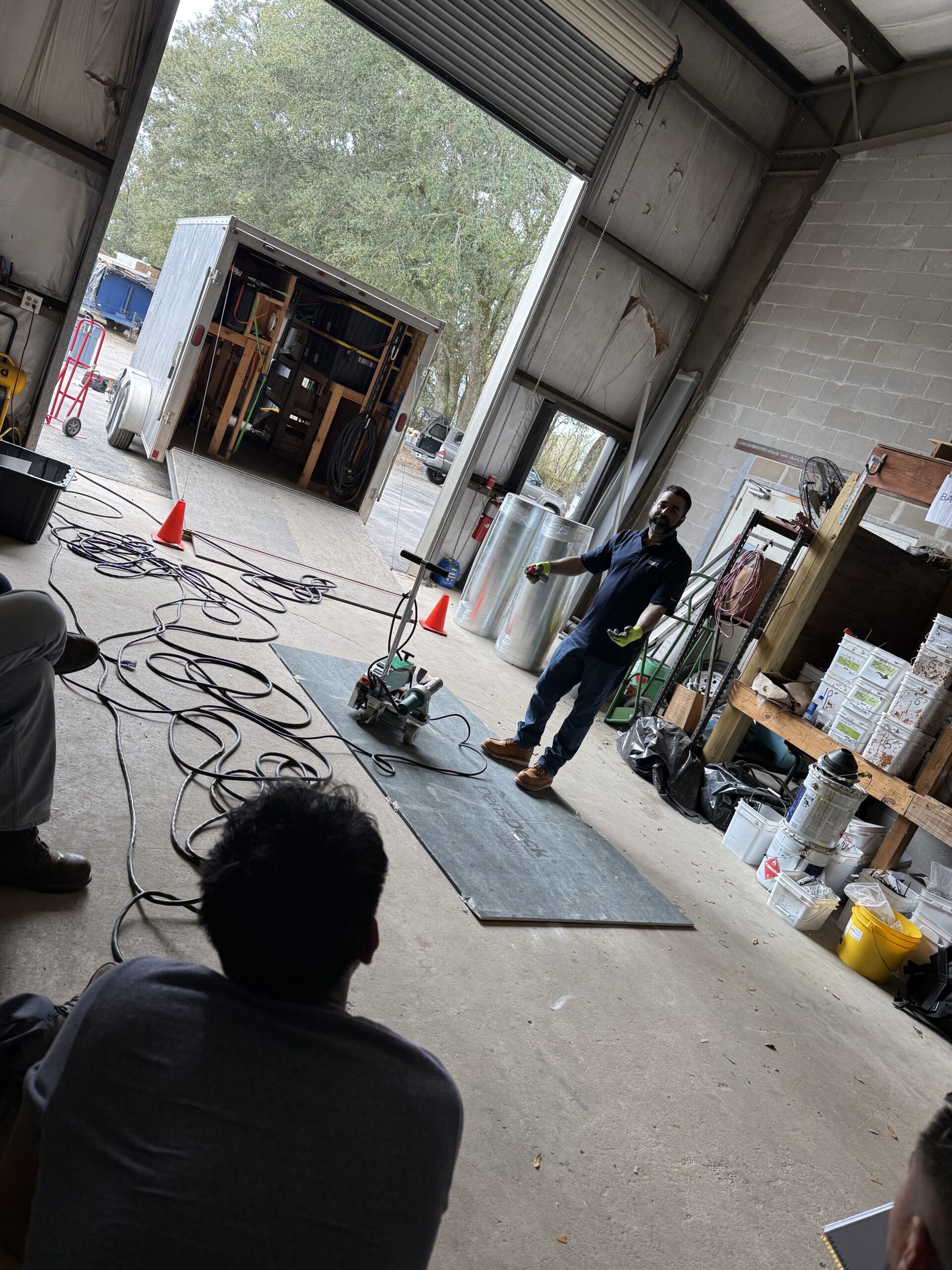
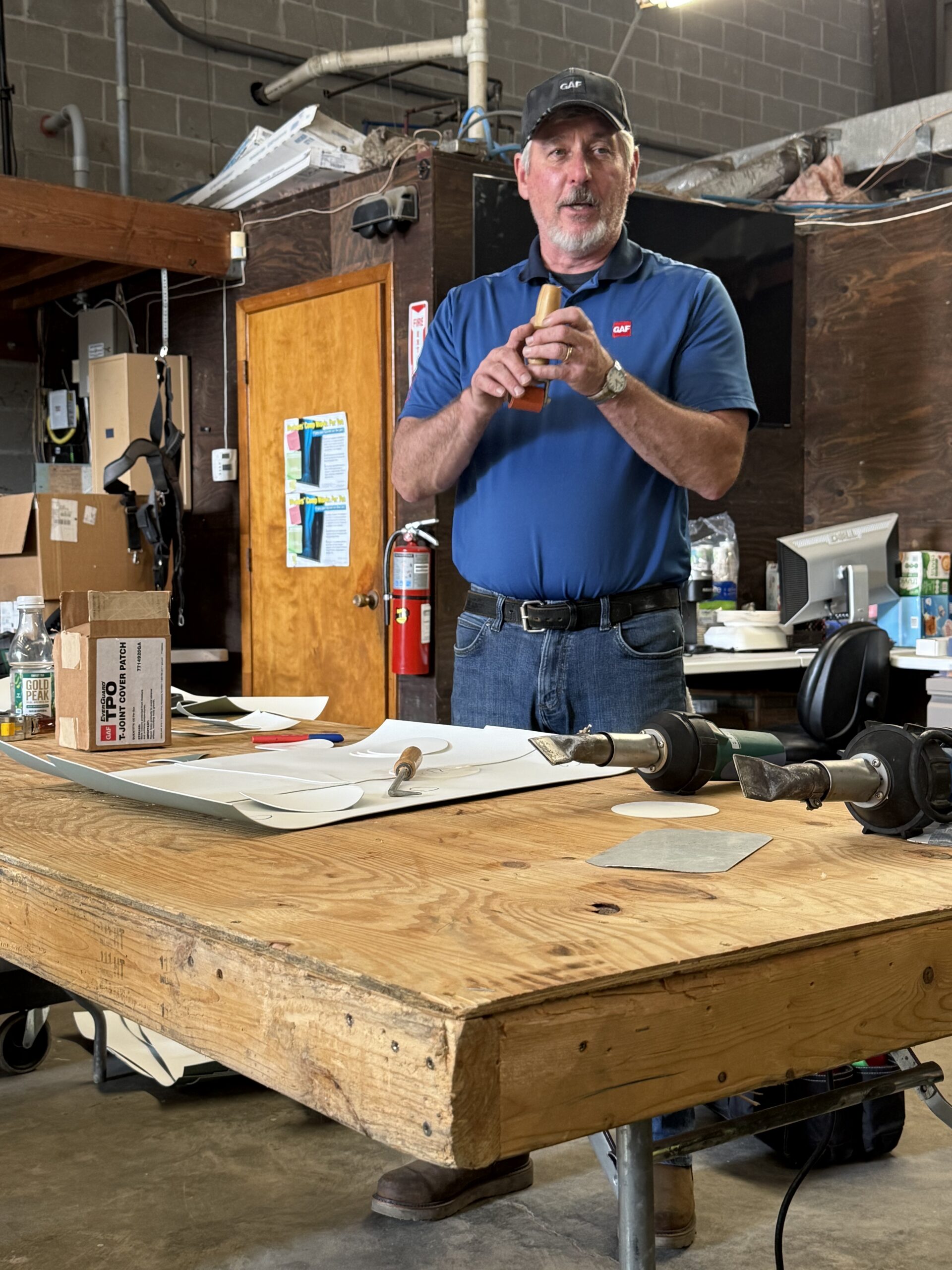
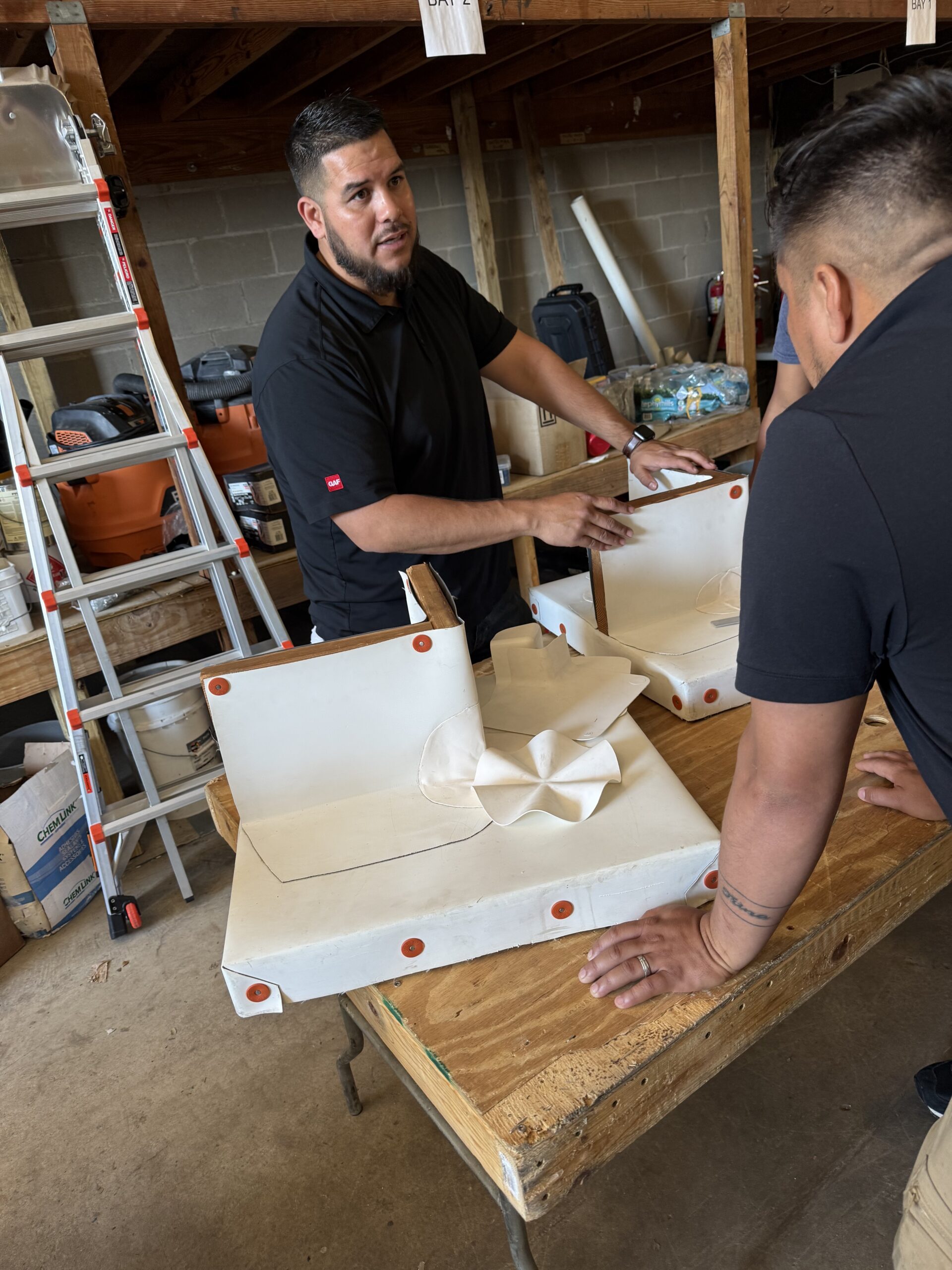
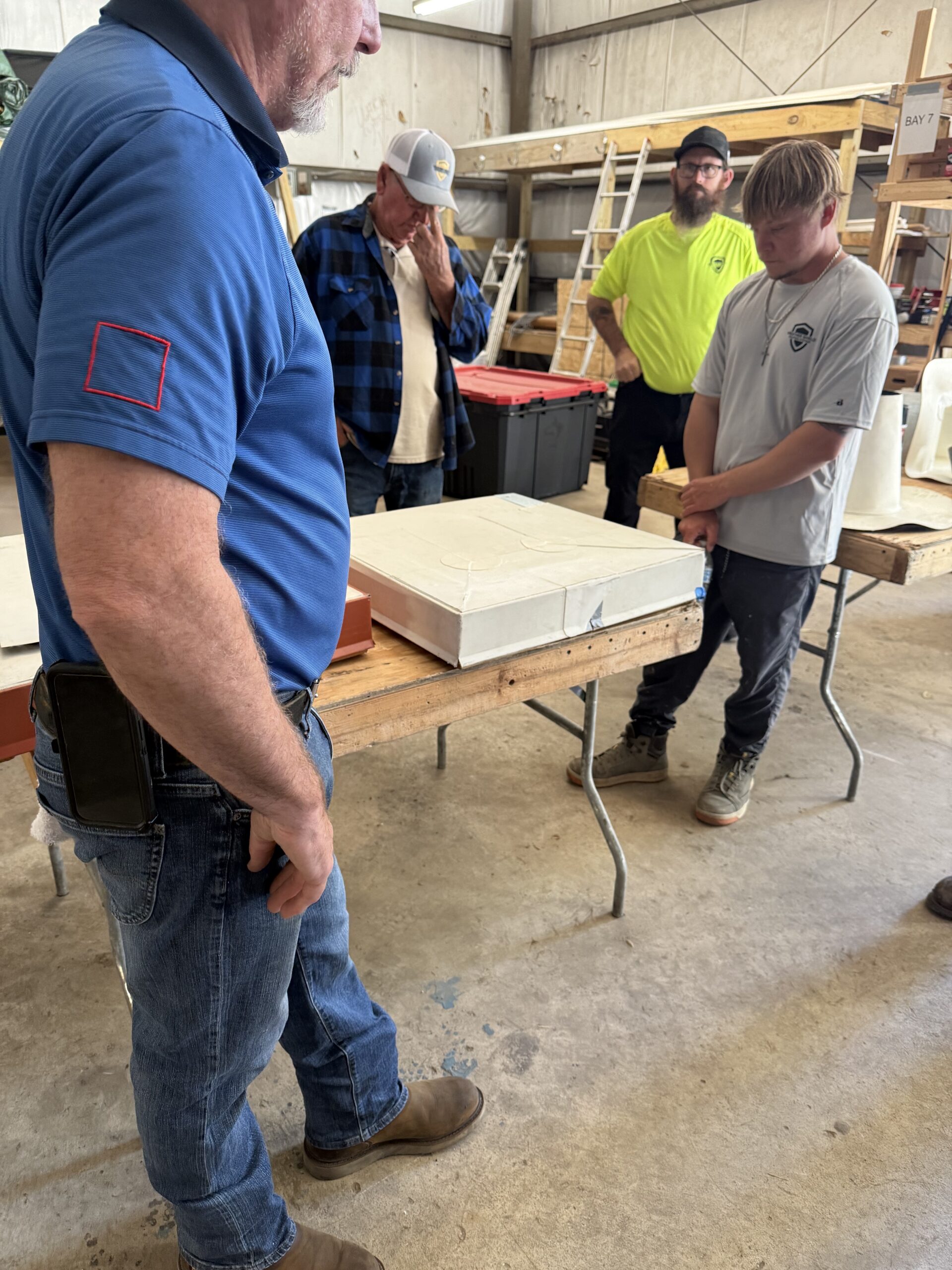
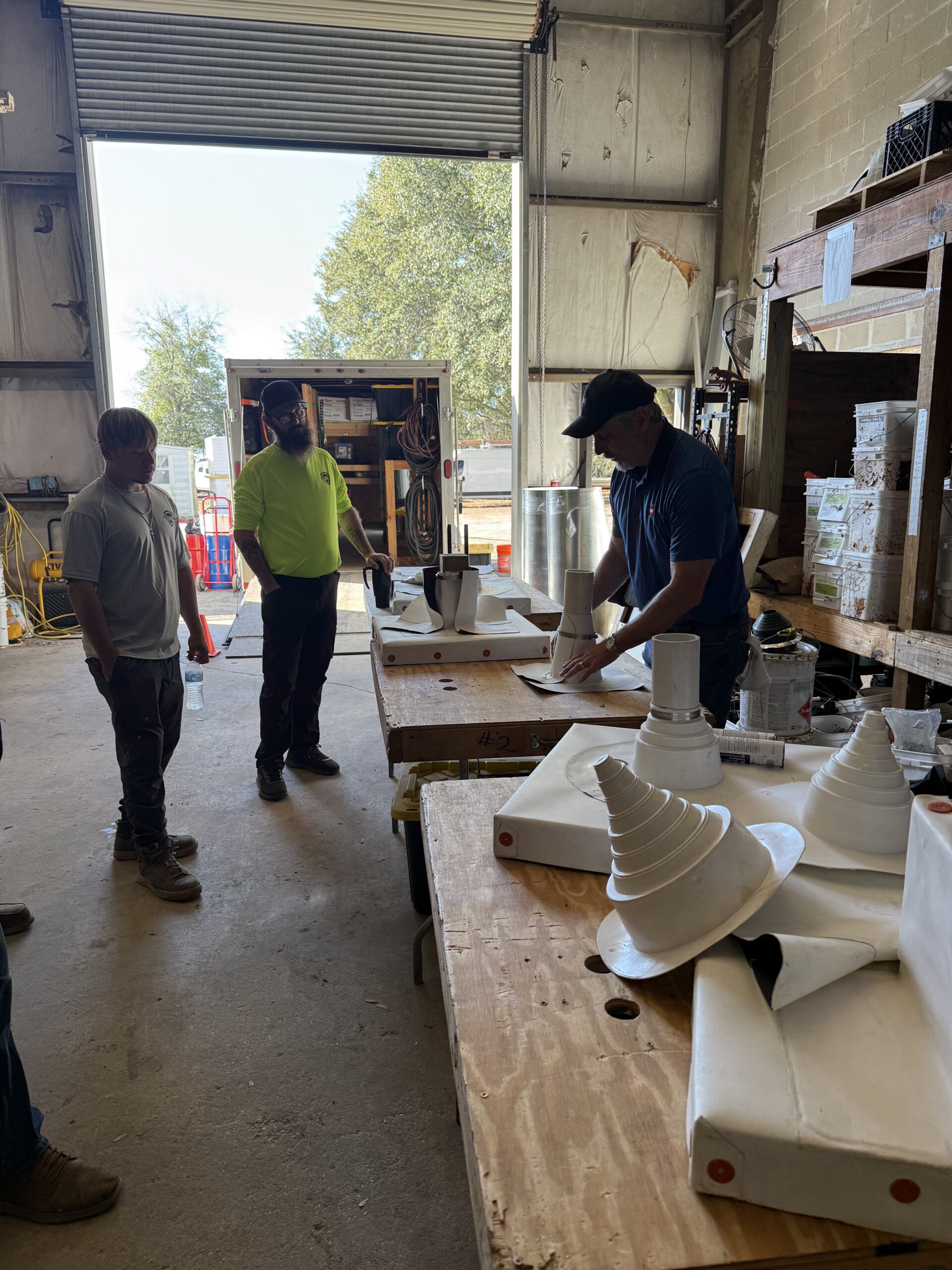
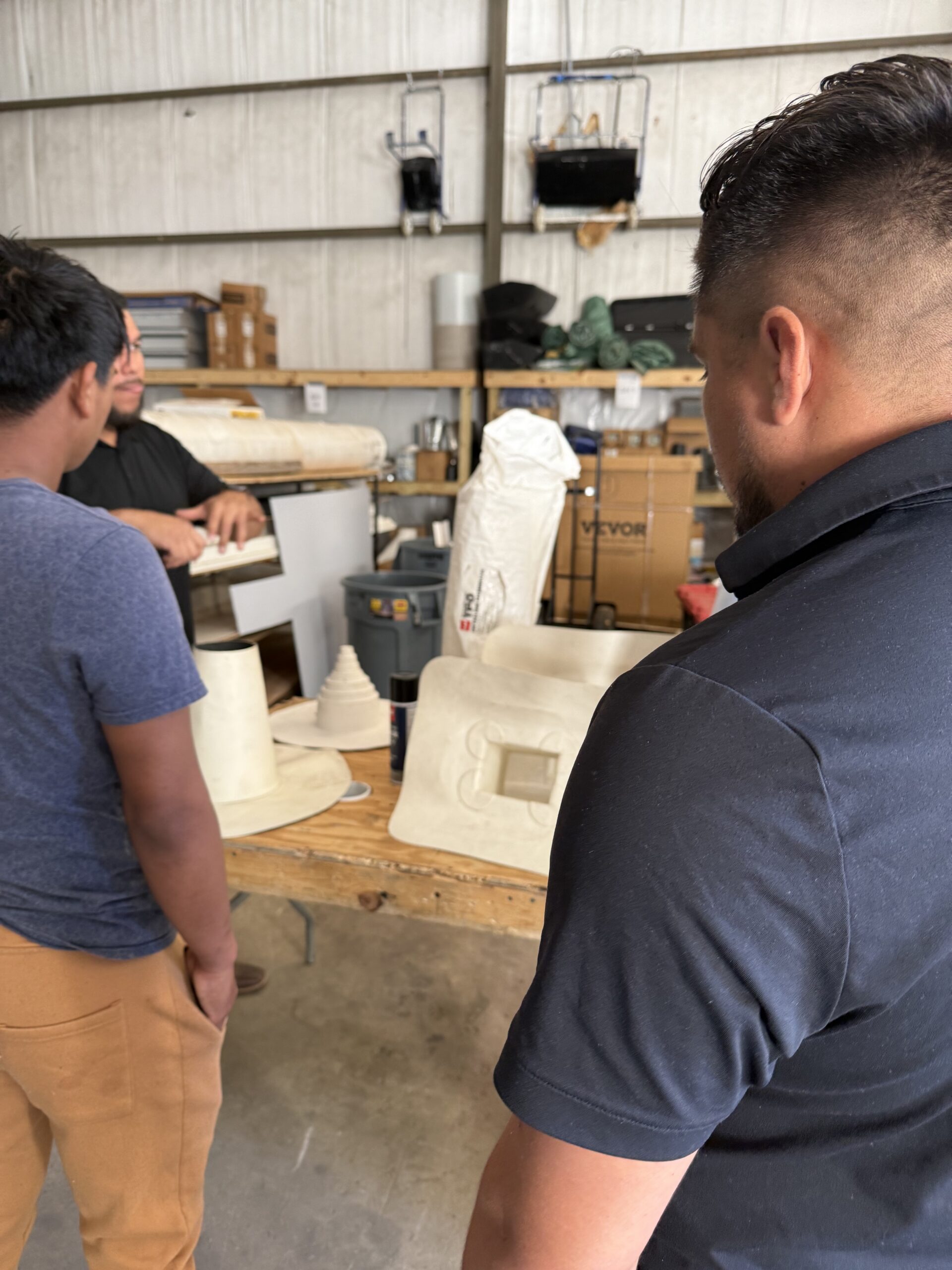
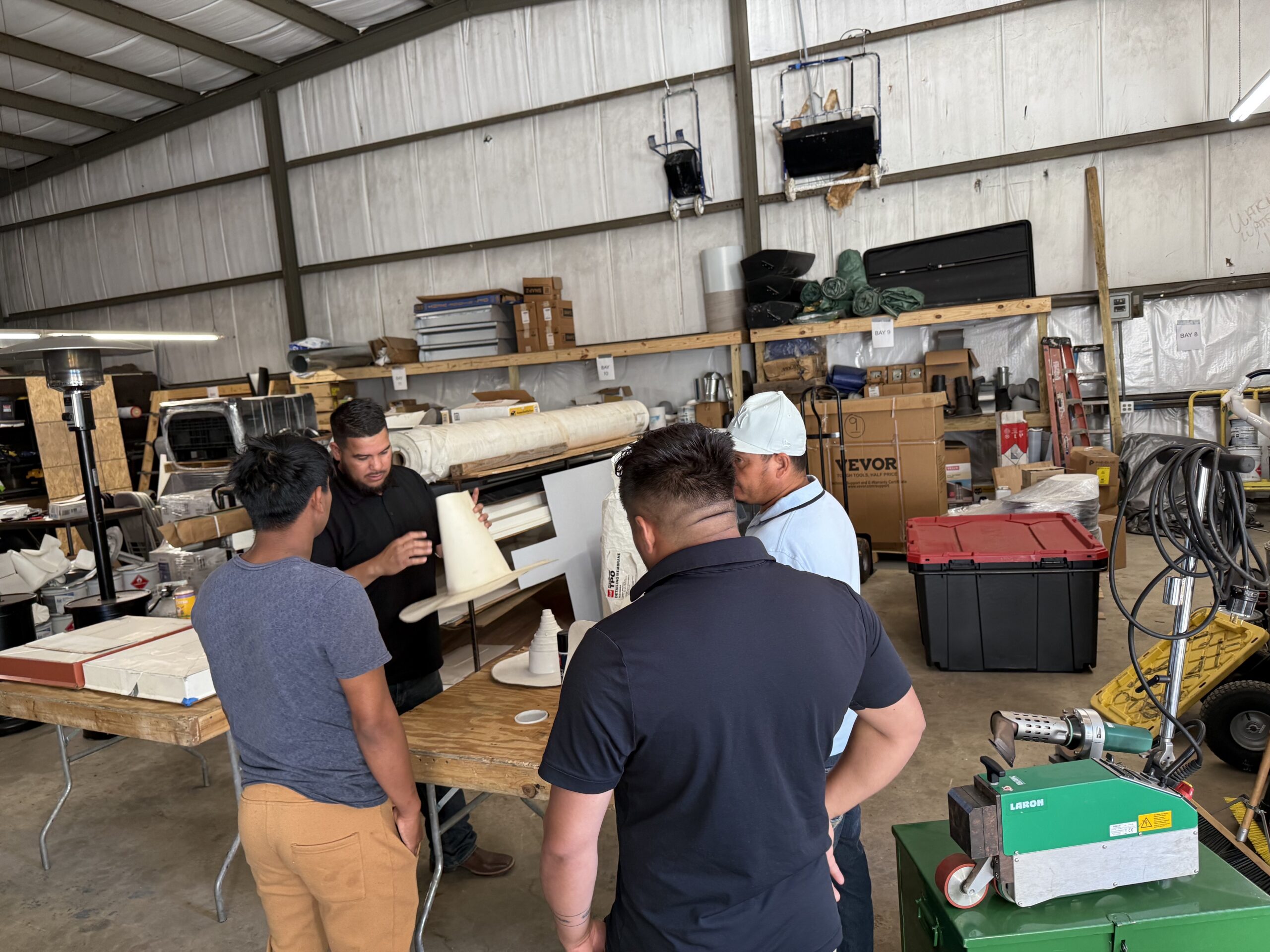
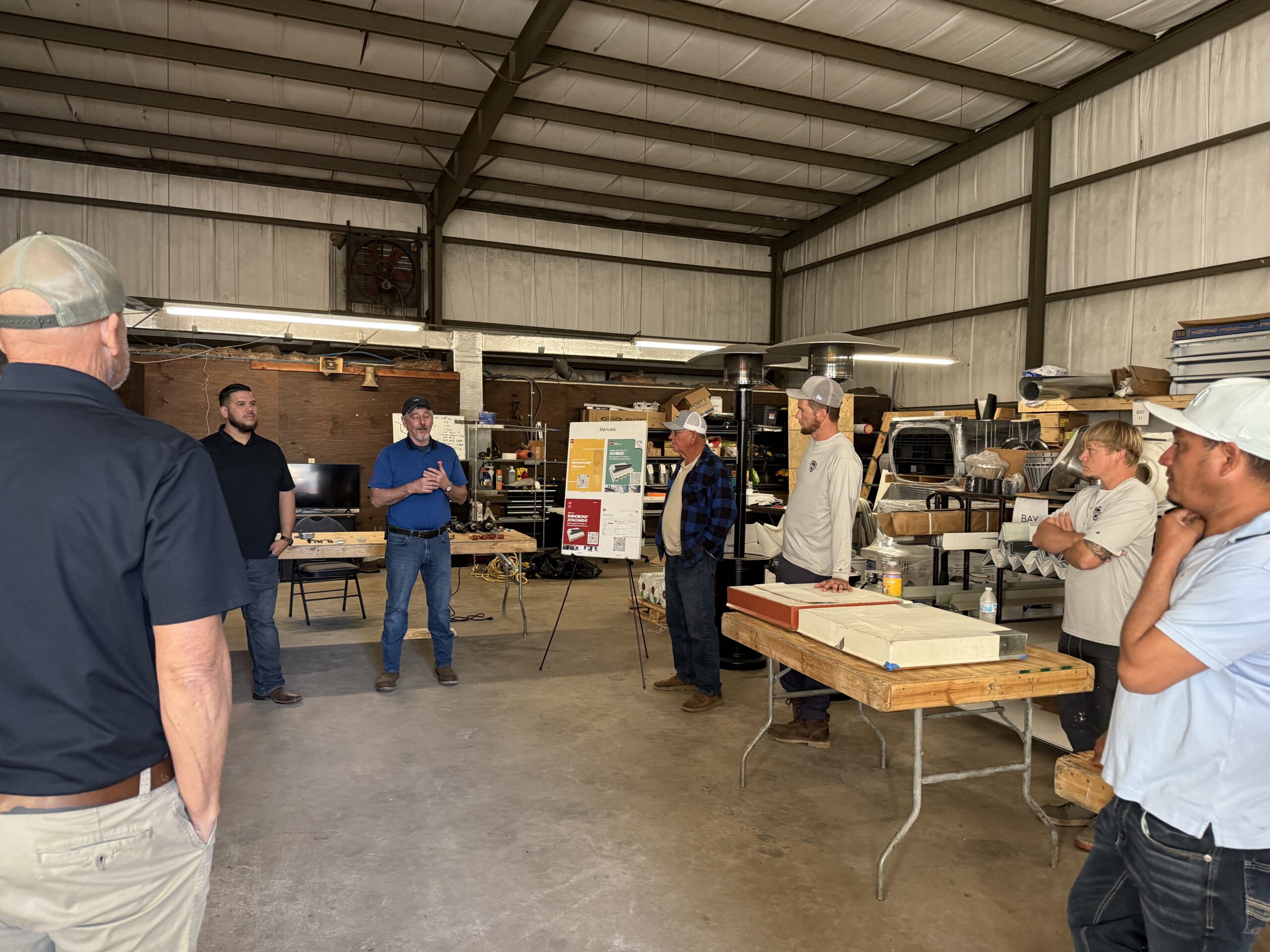
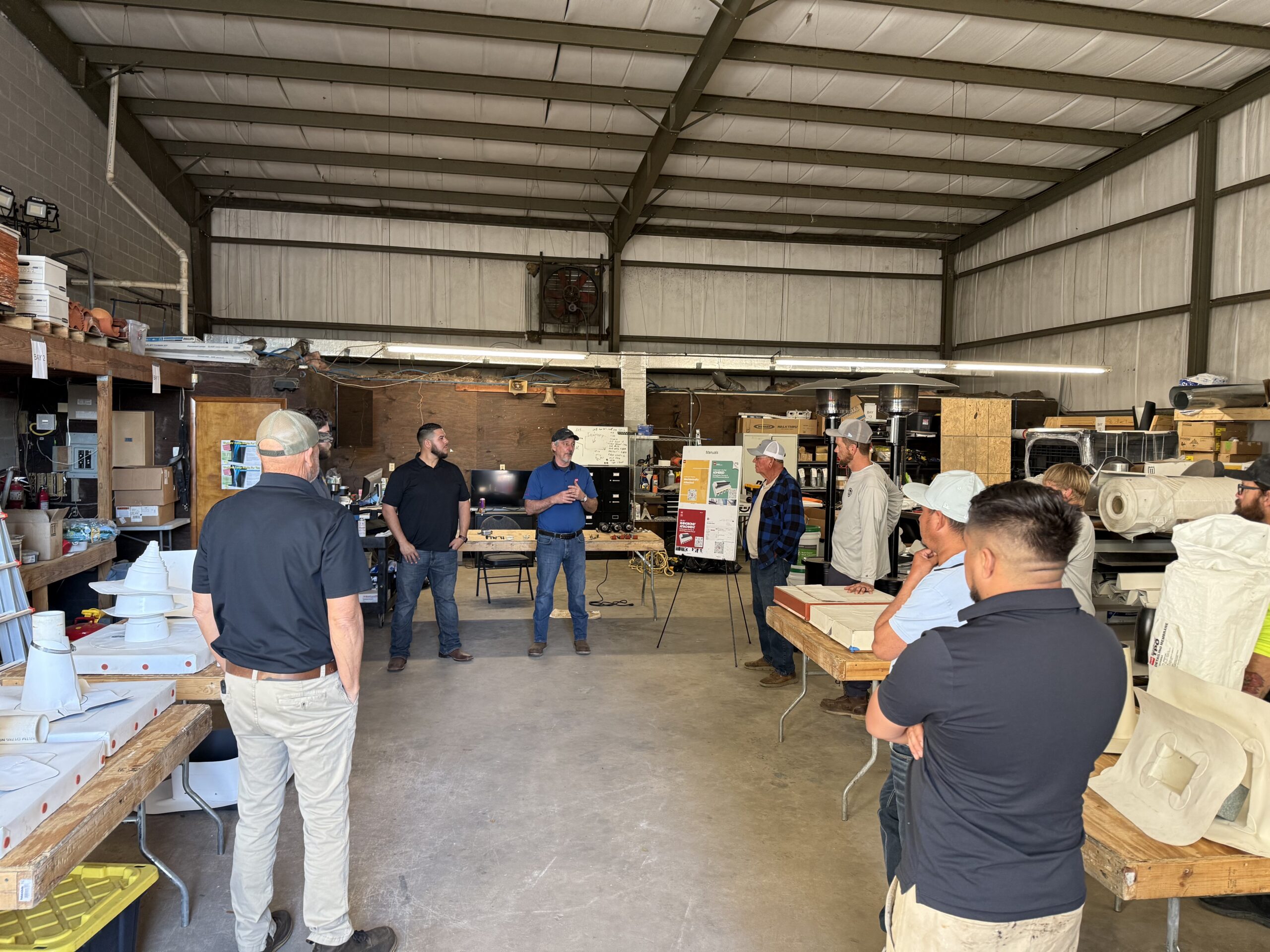
Recently, our Weather Shield Florida team participated in a hands-on training day led by industry experts from GAF, SRS Distribution, and BAK. The goal was simple: give both our field crews and office staff a deeper understanding of modern commercial roofing systems so we can better serve our customers.
Here is a closer look at what we learned and why it matters to you as a commercial property owner or manager.
Why Does Roofing Training Matter for Commercial Property Owners?
Commercial roofing is constantly evolving. New materials, changing building codes, and improved installation methods all affect how roofs perform and how long they last.
Ongoing training ensures our team understands the latest developments in:
- Commercial roofing systems
- Roof damage prevention
- Roof inspections and maintenance practices
- Installation methods that improve roof lifespan
- Emergency roof repair best practices
When contractors stay current with roofing technology and installation standards, it reduces the chances of costly mistakes and helps protect your roof investment.
That is exactly why we regularly bring in trusted industry experts to work directly with our team.
What Roofing Systems Did the Team Train On?
A major focus of the training day was understanding modern single-ply commercial roofing systems, specifically TPO and PVC.
What Is TPO Roofing and Why Is It Popular?
TPO roofing membrane is one of the most common commercial roofing systems used today. TPO stands for thermoplastic polyolefin, and it is widely used because it offers strong durability, energy efficiency, and relatively cost-effective installation.
During the training, our team learned more about:
- Proper TPO installation techniques
- How heat welded seams create a watertight barrier
- Best practices for preventing roof leaks
- How installation choices affect roof lifespan
Understanding these details helps ensure a TPO roof performs as expected for years to come.
Related blog posts:
What Is PVC Roofing and When Is It Used?
Another key focus was PVC roofing membrane, which is often used on buildings that require enhanced chemical resistance or durability.
PVC roofs are commonly installed on:
- Restaurants
- Manufacturing facilities
- Buildings with grease exhaust systems
- Properties with chemical exposure risks
During the training, our team compared PVC and TPO systems and learned when each system may be the better choice for long term roof investment protection.
For property managers, that knowledge matters because selecting the right roofing system can significantly impact roof maintenance costs and overall performance.
How Have Building Codes Changed for Commercial Roofing?
Building codes are not static. They evolve over time to improve building safety and storm resistance.
One part of the training focused on recent changes to fastening patterns along the perimeter of commercial roofs. These changes help roofs better withstand strong wind uplift forces during severe weather.
Our team reviewed how newer building codes affect:
- Fastening density near roof edges
- Wind resistance requirements
- Installation standards for single ply systems
- Long term roof durability
For building owners, these code changes are important because they directly influence roof damage prevention and structural safety during storms.
A properly installed roof that meets modern code requirements is far less likely to experience wind-related roof leaks or membrane failure.
Related blog post:
What to Know About Roofing Code Requirements Before Replacing Your Commercial Roof
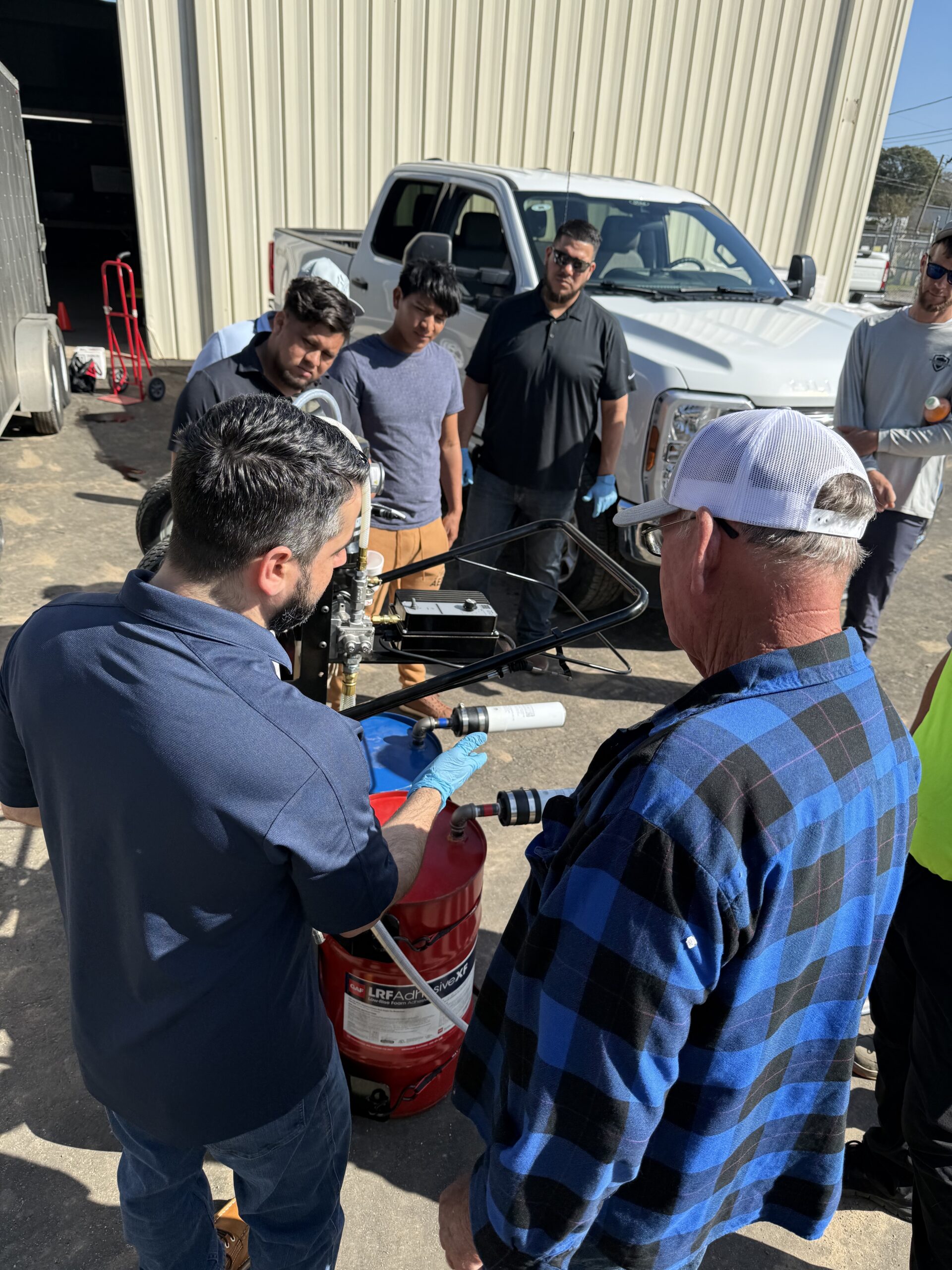
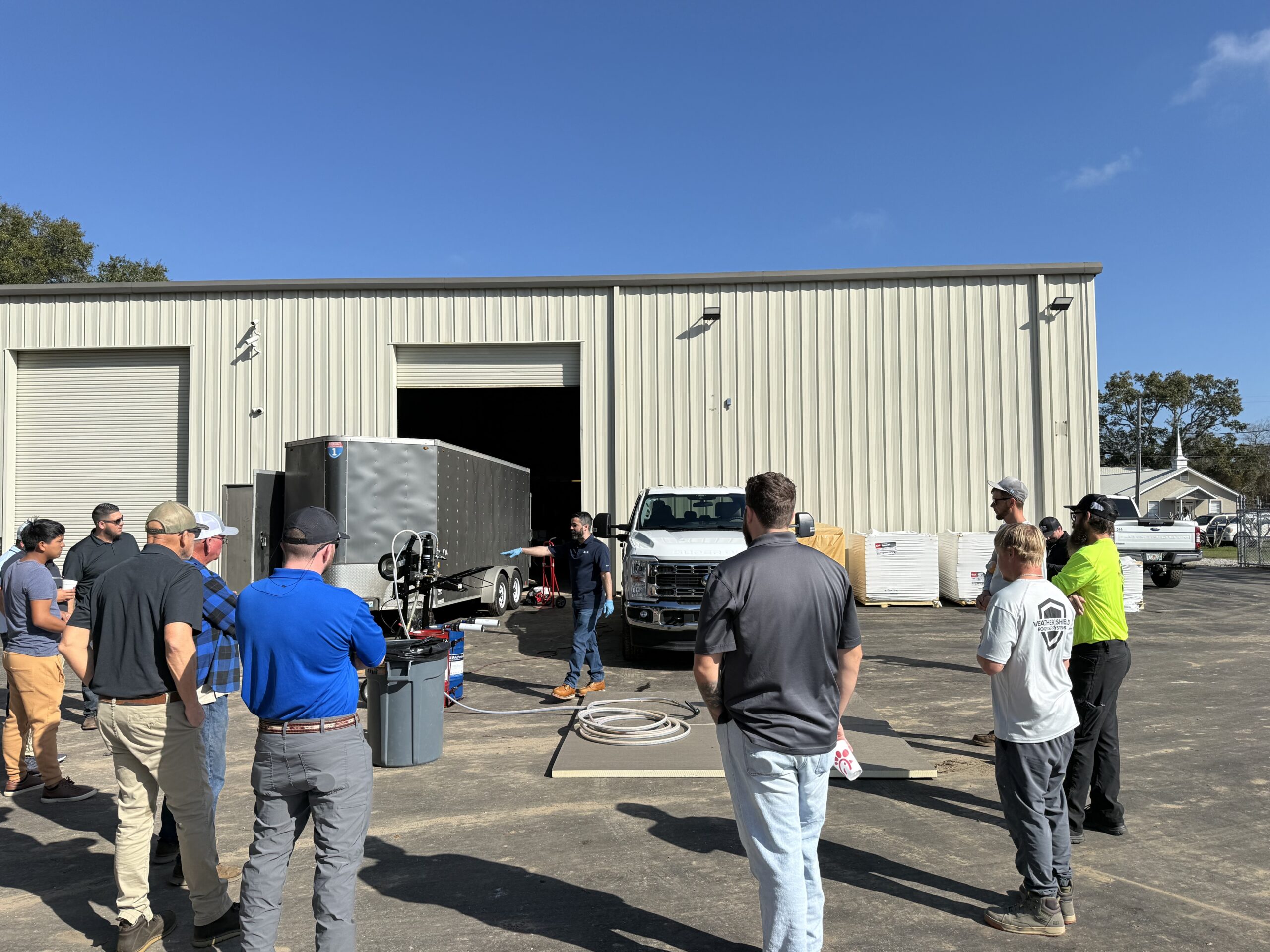
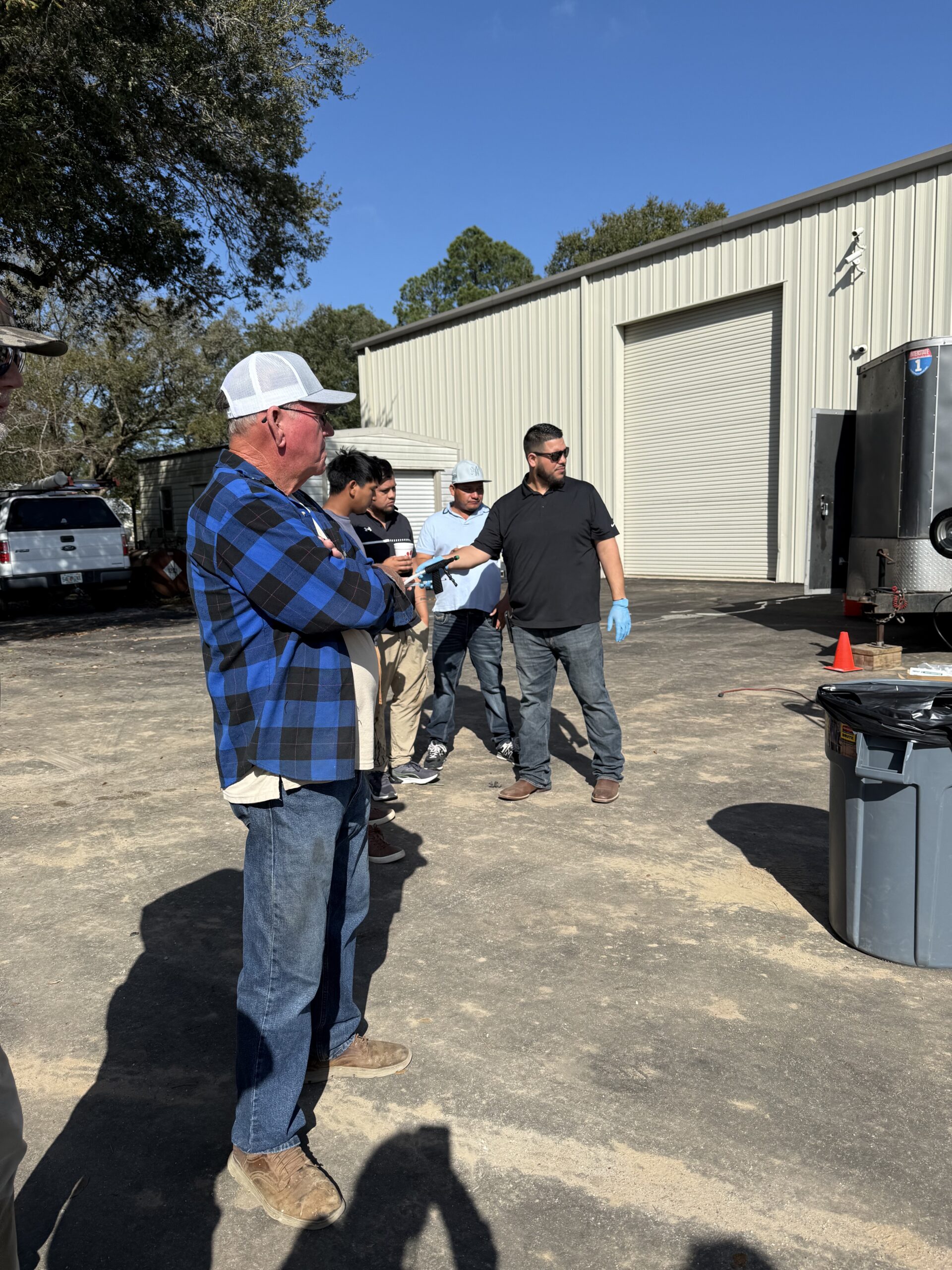
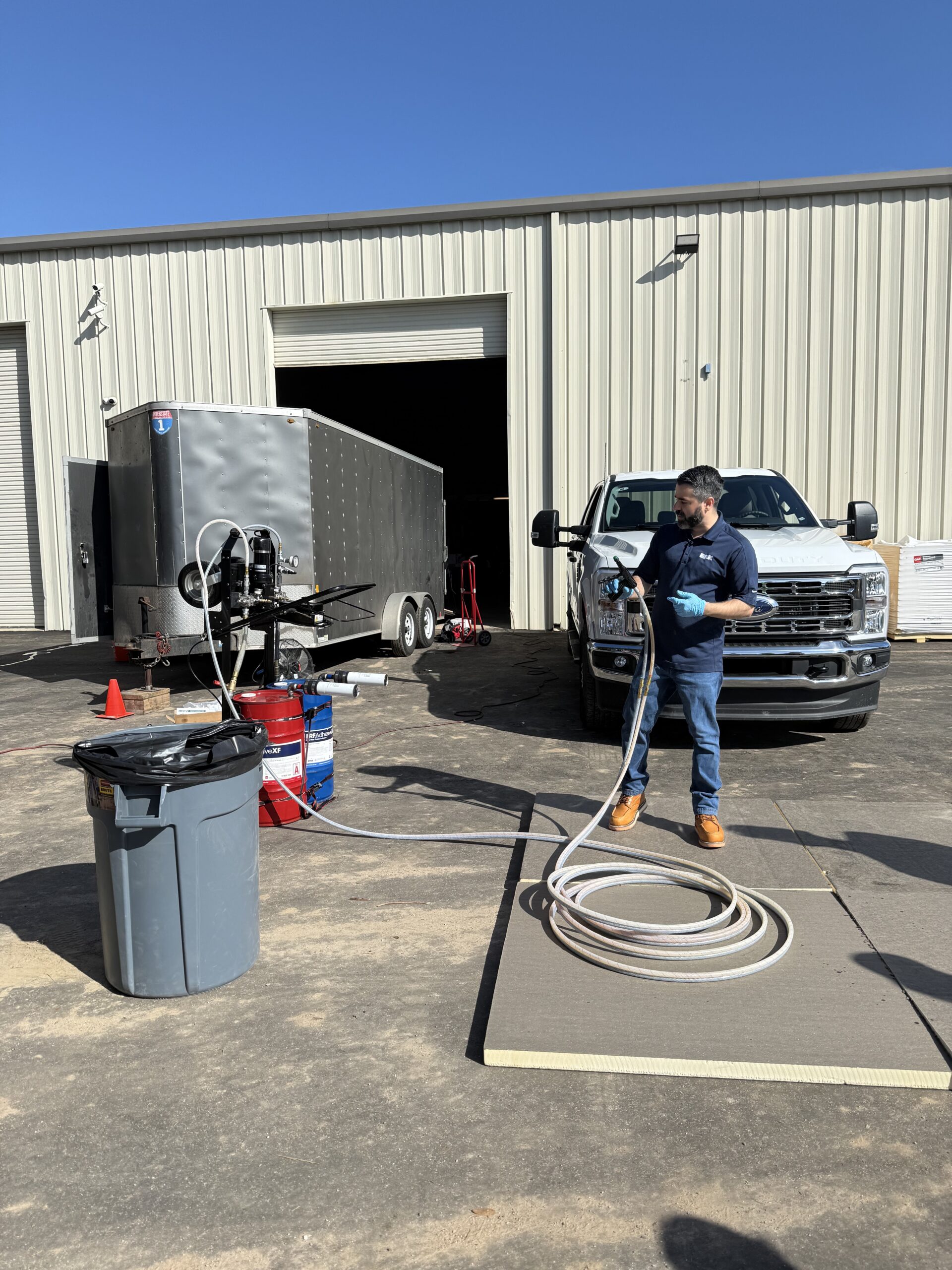
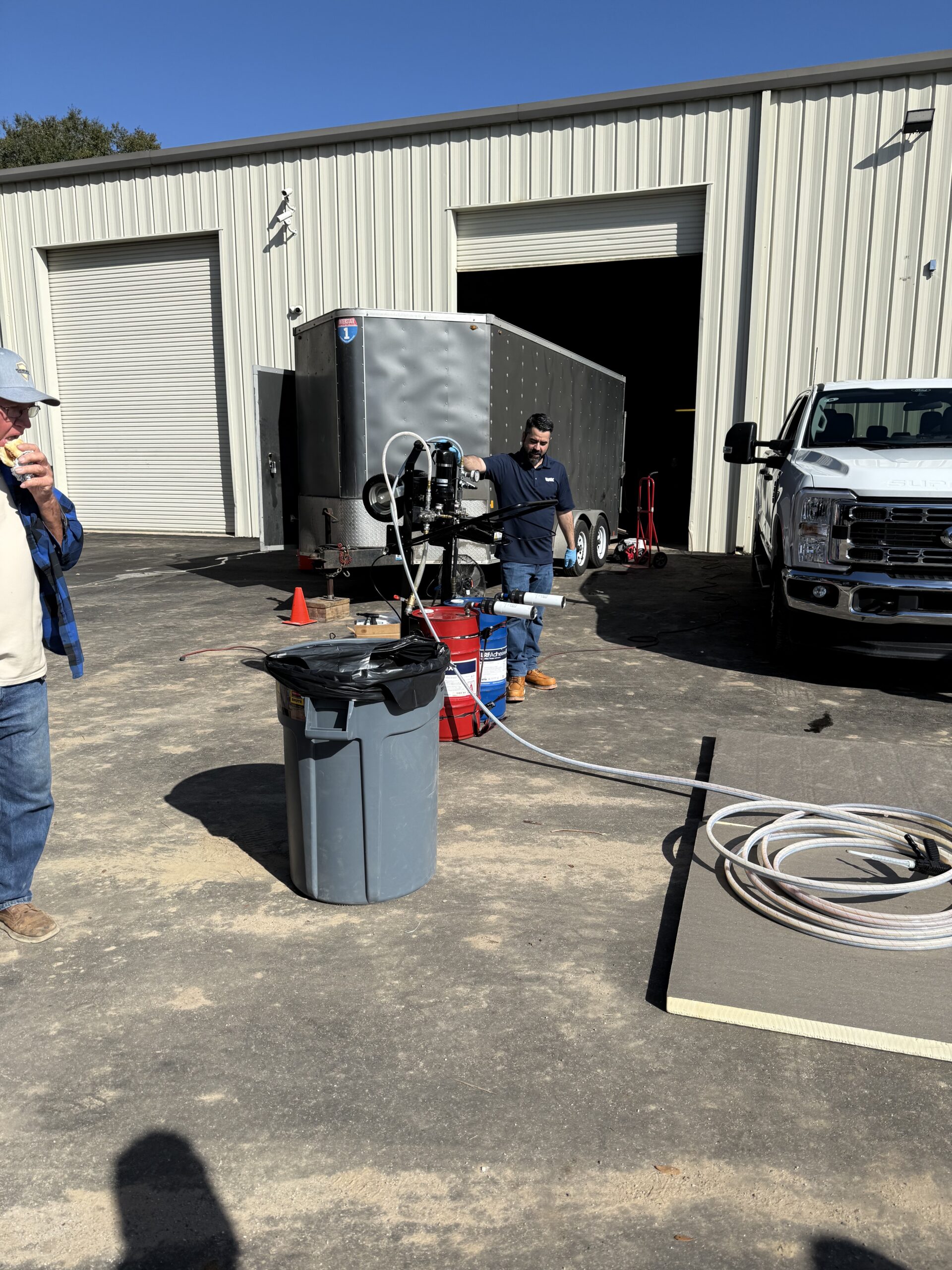
What Are Splatter vs Ribbon Adhesive Techniques?
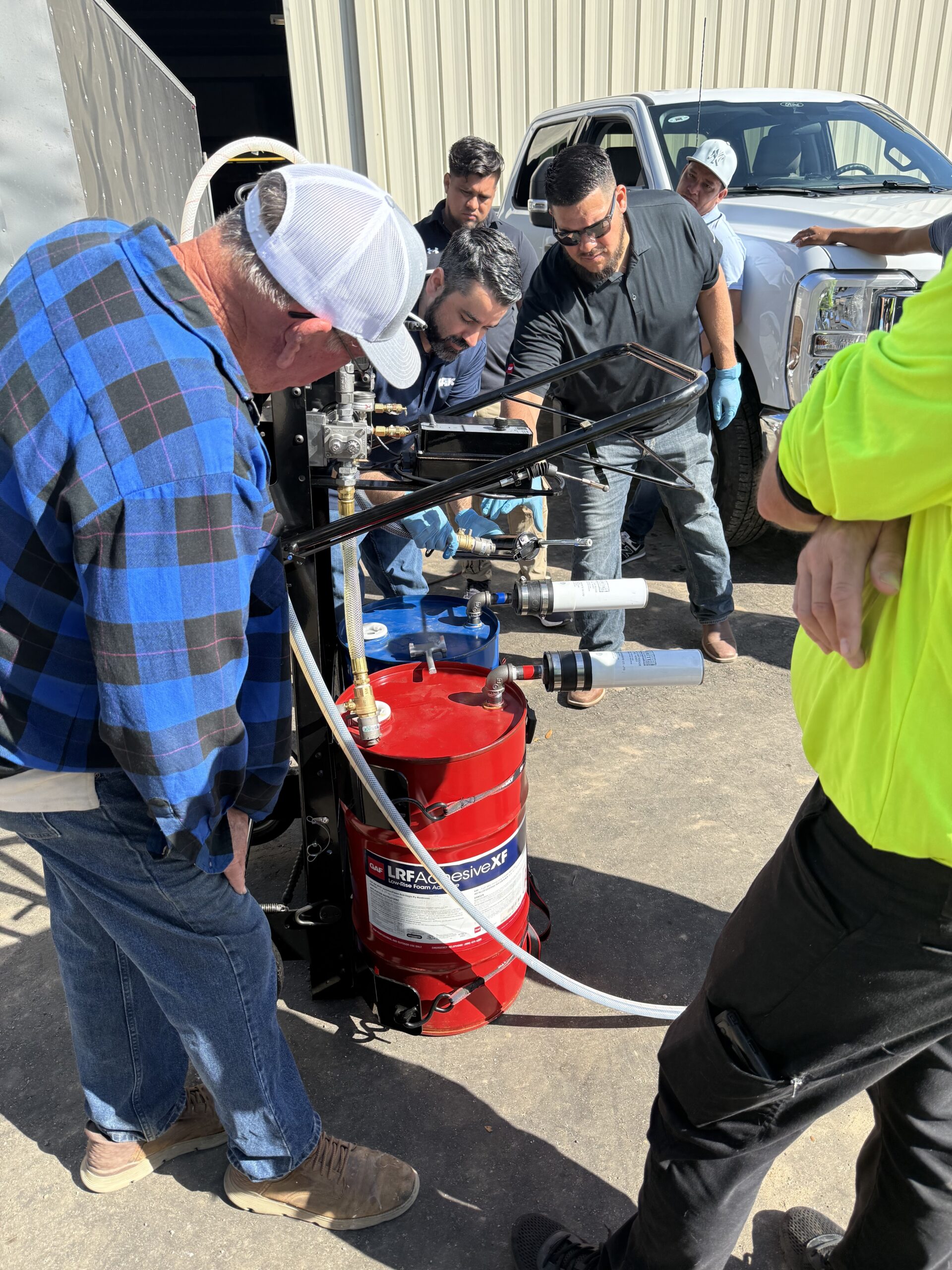
Another hands-on portion of the training involved learning about different adhesive application methods used in commercial roofing systems.
Specifically, the team practiced two common techniques:
Splatter Adhesive Application
This method involves applying adhesive in a scattered pattern across the roof surface. It allows for faster installation and is commonly used in certain roofing systems where full coverage is not required.
Ribbon Adhesive Application
This method uses straight lines of adhesive placed in ribbons across the roof deck. It can provide stronger attachment and may improve wind uplift performance in some applications.
Understanding the advantages of each method helps ensure the right installation technique is used for the specific roofing system and building conditions.
These decisions can directly impact roof lifespan and long-term roof maintenance needs.
Why Are Flashing Details So Important for Preventing Roof Leaks?
Most commercial roof leaks do not occur in the field of the roof membrane. They usually happen at penetrations and transitions.
That is why flashing details are so critical.
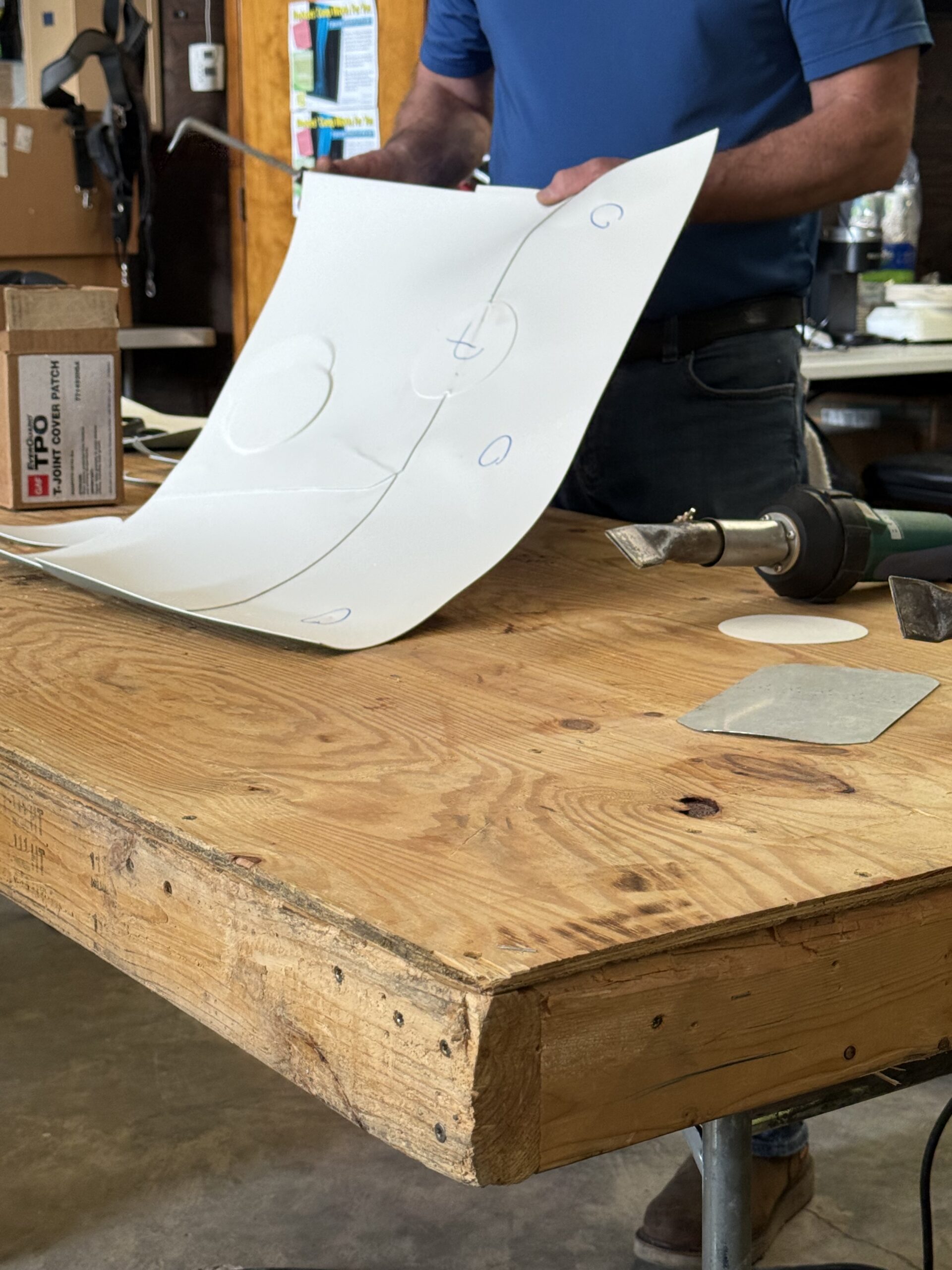
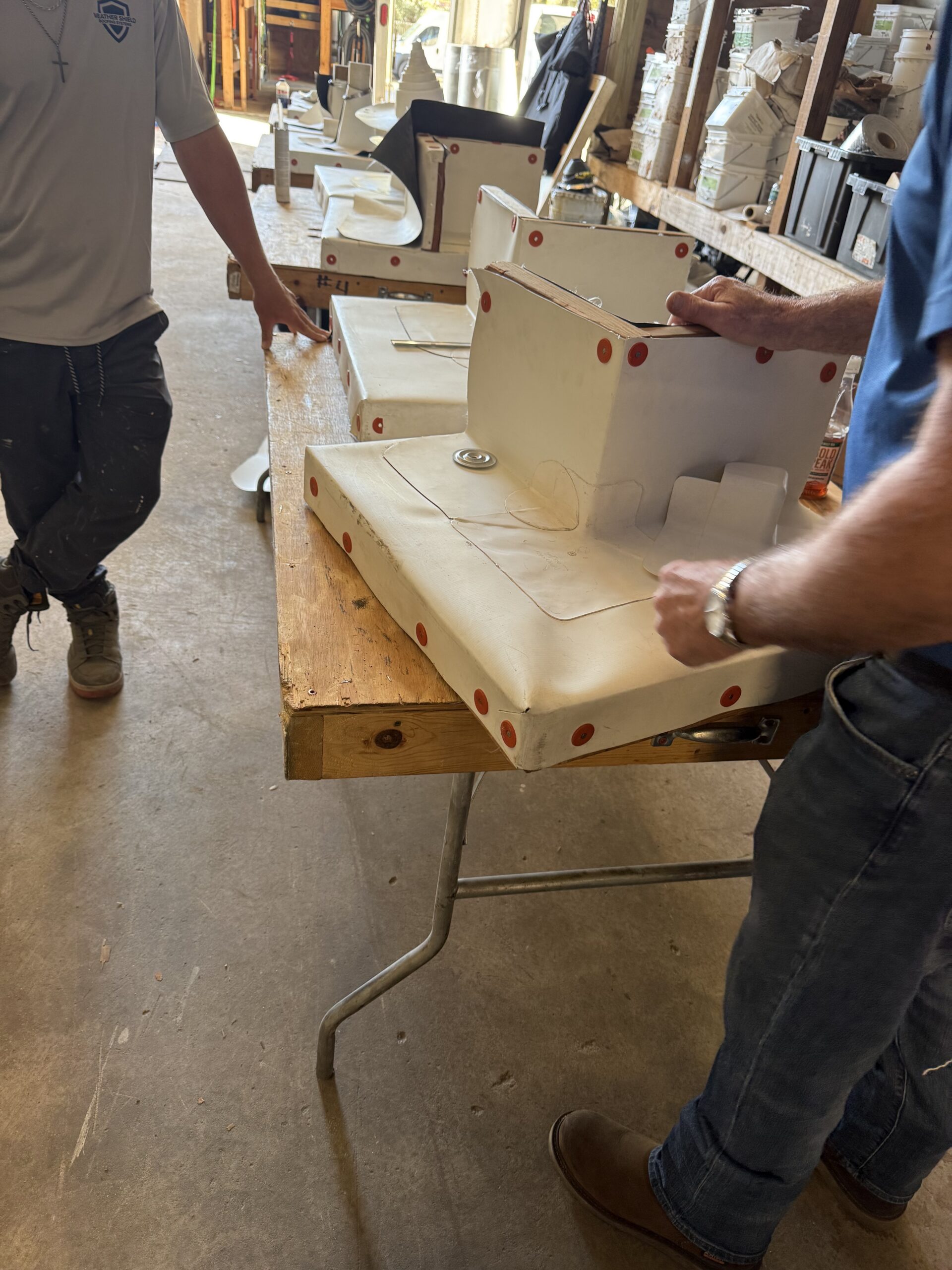
During the training, our team reviewed multiple options for properly flashing roof penetrations such as:
- Curb flashing for rooftop equipment
- Pipe flashing systems
- Prefabricated flashing components
- Custom heat welded flashing details
These areas are some of the most vulnerable points on a commercial roof. Proper flashing techniques are essential for preventing water intrusion and reducing the need for emergency roof repair.
When flashing is installed correctly, it significantly improves roof durability and protects your building’s interior from water damage.
Why Is Heat Welding Such an Important Skill?
Heat welding is one of the defining characteristics of single ply roofing systems like TPO and PVC.
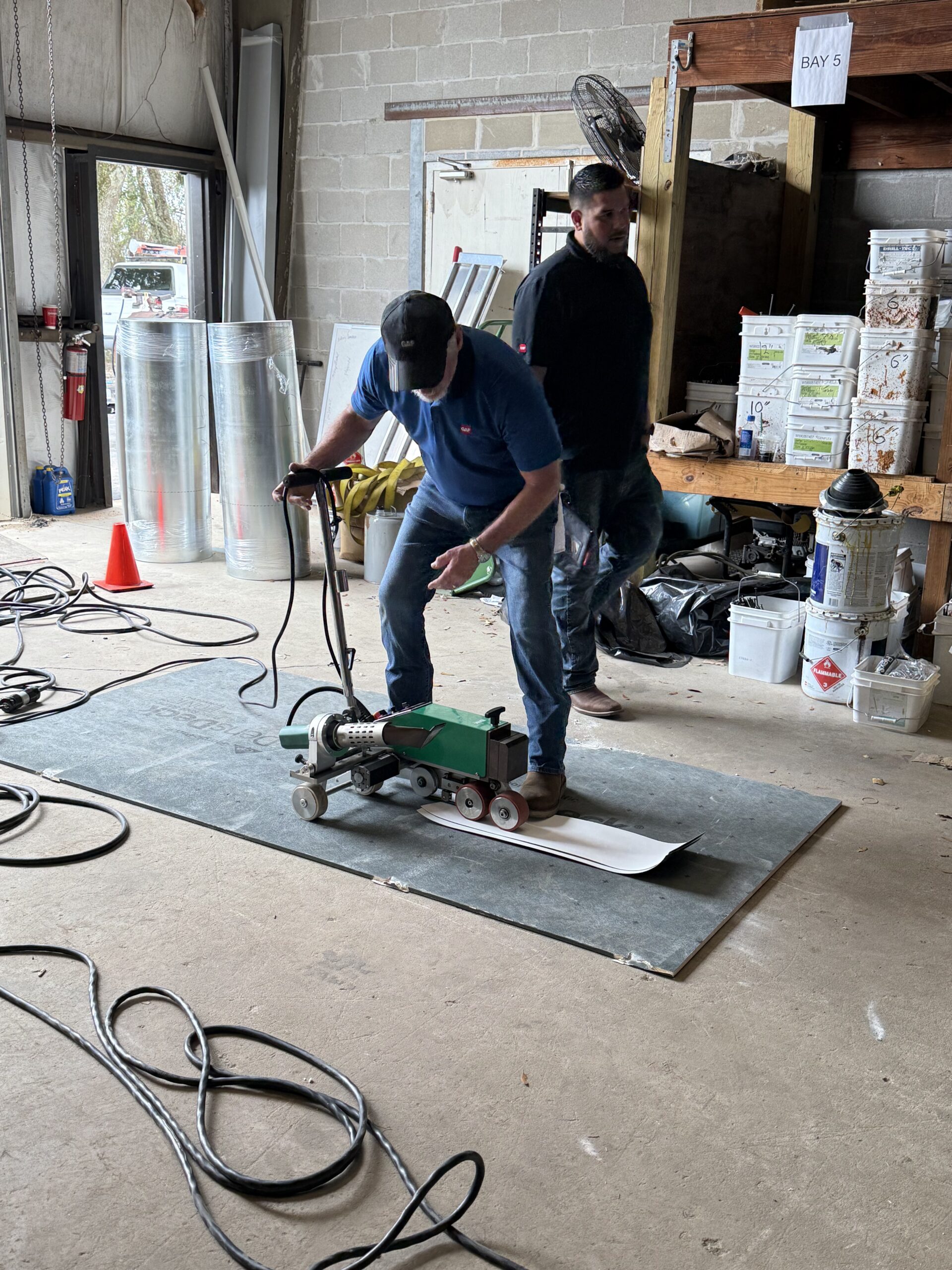
Instead of relying on adhesives alone, seams are welded together using specialized heat welding equipment to form a continuous watertight bond.
During the training, our team had the opportunity to practice their heat welding skills using professional equipment from BAK. This hands-on experience allows technicians to better understand:
- Proper welding temperatures
- Seam consistency
- How to avoid weak seams that can lead to roof leaks
- How seam strength impacts roof lifespan
Well executed heat welded seams are one of the key reasons modern single ply commercial roofing systems perform so well.
Why Did We Include Both Field and Office Staff in the Training?
One of the most unique aspects of this training day was that we invited both field crews and office staff to participate.
Why does that matter?
Because commercial roofing projects involve more than just the people installing the roof.
Our estimators, project managers, and office team members all play a role in helping customers make informed roofing decisions. By giving everyone the opportunity to learn about roofing systems, installation methods, and building code updates, we strengthen the entire team.
That means when you call Weather Shield, you are speaking with someone who truly understands the complexities of commercial roofing, not just someone reading from a script.
The result is better communication, clearer recommendations, and more confidence in the roofing solutions we provide.
How Does Training Like This Protect Your Roof Investment?
For commercial property owners and facility managers, your roof is one of the most important assets protecting your building.
Poor installation or outdated practices can lead to:
- Premature roof failure
- Frequent roof leaks
- Expensive emergency roof repair
- Shortened roof lifespan
By investing in ongoing training with respected industry partners like GAF, SRS, and BAK, we ensure our team stays current with the best practices in commercial roofing.
The more knowledgeable our team is, the better we can help customers make smart decisions about roof inspections, roof maintenance, and long-term roof cost savings.
At Weather Shield Roofing Systems, we believe education and transparency are essential to protecting your roof investment.
If you would like to speak with our team about commercial roofing, roof inspections, or proactive roof maintenance solutions like our Max Life Roof Care program, we are always happy to help.

Michelle Boykin
Michelle Boykin is the Branch Manager for Weather Shield Roofing Systems in Florida. She has over 17 years of commercial roofing experience, with a focus on building strong teams, creating scalable processes, and providing excellent customer service. As Past Chair of National Women in Roofing and current board member of the National Roofing Contractors Association, she collaborates with industry leaders to encourage professionalism in the Roofing Industry.