
How Much Snow Is Too Much Snow on a Flat Roof?
If you own or manage a building in a cold climate, you’ve probably asked this question at least once during a long winter:
“How much snow is too much snow on a flat roof?”
It’s a fair question. Unfortunately, it’s also the wrong one — and that misunderstanding is what gets people into trouble.
At Weather Shield Roofing Systems™, we’ve spent more than 40 years helping property owners across the Midwest and other snowbelt regions navigate harsh winters. We’ve also seen what happens when snow quietly builds up, weather events stack on top of each other, and a roof that seems fine suddenly isn’t.
This article isn’t about fear, DIY fixes, or engineering formulas. It’s about awareness — understanding when winter conditions may be pushing your building into risky territory, and when it’s time to call a professional.
The Real Question Isn’t “How Many Inches of Snow?”
Most people want a simple answer:
“If I have X inches of snow on my roof, am I safe?”
Here’s the reality: snow load risk is about weight — and more importantly, added weight — not just depth.
Snow doesn’t stay fluffy for long. Over time, it settles and compresses under its own weight.
When a foot of snow turns into six inches, it didn’t get lighter — it just takes up less space. The load is still there.
The real danger comes when additional water gets involved.
Heavy snow followed by rain, partial melting that can’t drain, or water trapped in ice all add weight the roof didn’t have before. That’s when a roof that’s been “handling it fine” can suddenly be pushed past its limit.
Why Flat Roofs Are Especially Vulnerable to Snow Load
Flat commercial roofs face a different challenge than sloped roofs.
Snow doesn’t naturally slide off. It stays put.
Other factors that increase risk include:
- Blocked or frozen drains that prevent meltwater from escaping
- Uneven snow accumulation across large roof areas
- Long periods of cold weather where snow never fully melts
Even a properly designed and well-maintained commercial roofing system can be overwhelmed when prolonged or unusual winter weather stacks up. The issue isn’t necessarily how the roof was built — it’s how long it’s been under stress and what new weather events get added on top.
Snow Load Problems Often Show Up Where Roofs Change
Snow load issues also tend to show up first where roof planes change.
That might include:
- Where a lower roof meets a taller wall
- Where an upper roof drains onto a lower roof
- Areas where snow naturally piles up against vertical surfaces
Buildings are typically designed with these conditions in mind. But during long winters or abnormal weather patterns, snow and ice can still accumulate unevenly in these locations — especially if drainage is compromised.
The key point isn’t design failure. It’s recognizing where load can quietly concentrate over time without being obvious from the ground.




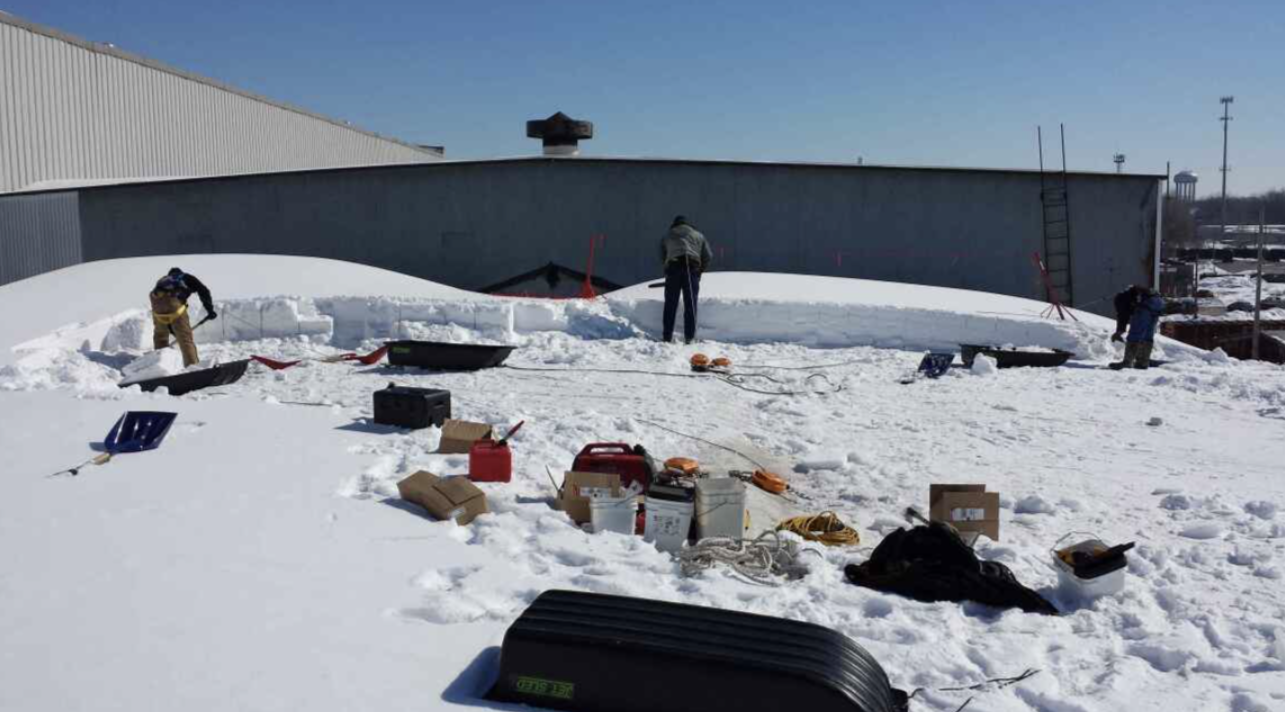
What We’ve Seen During Major Snow Load Failures
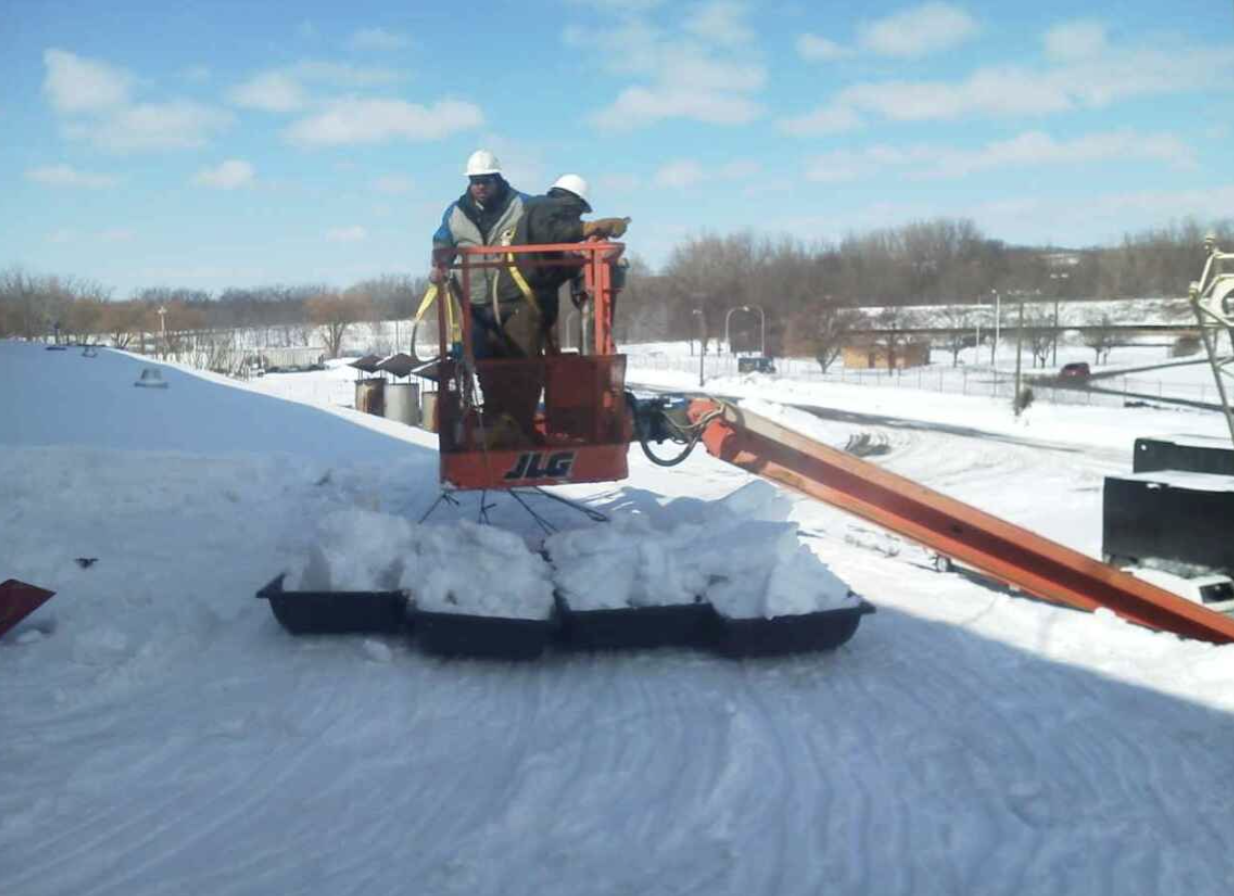
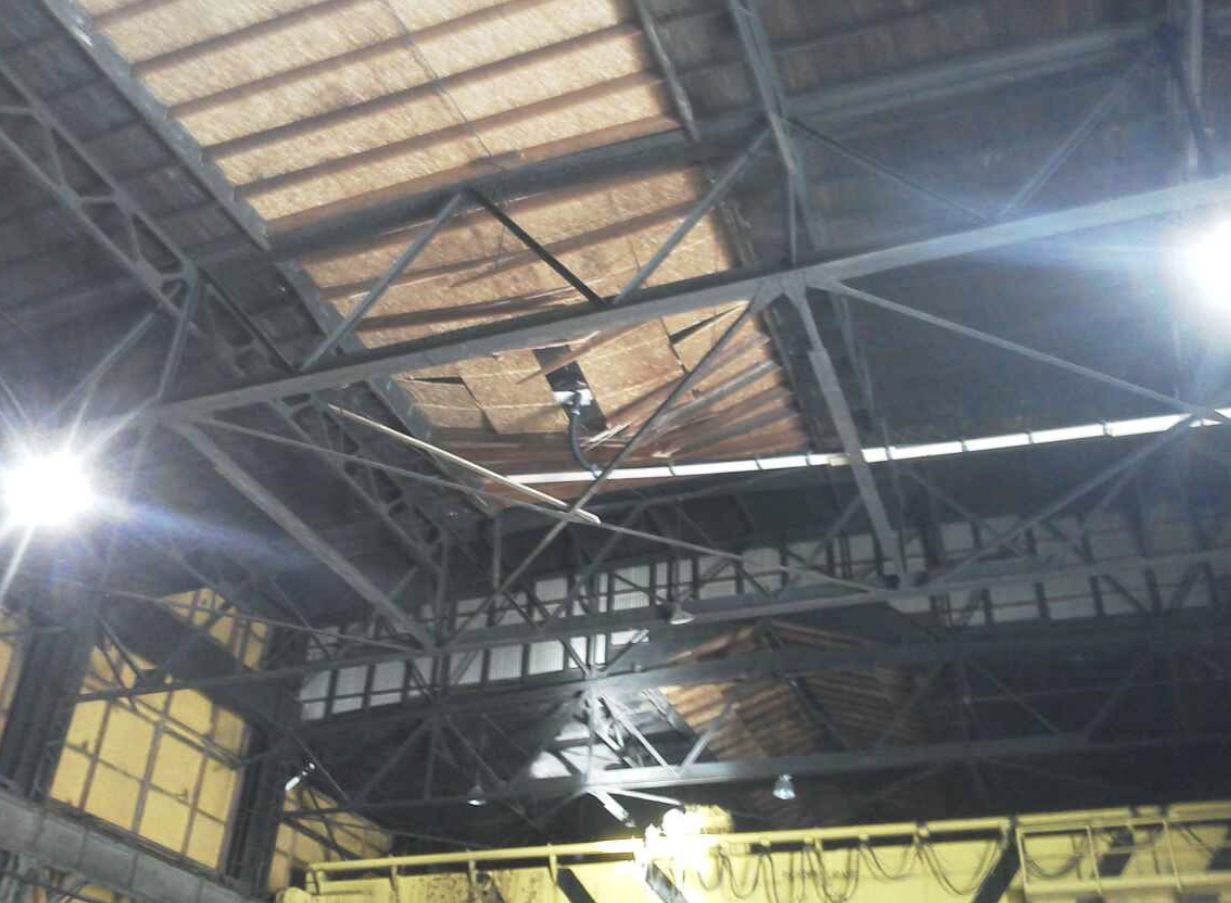
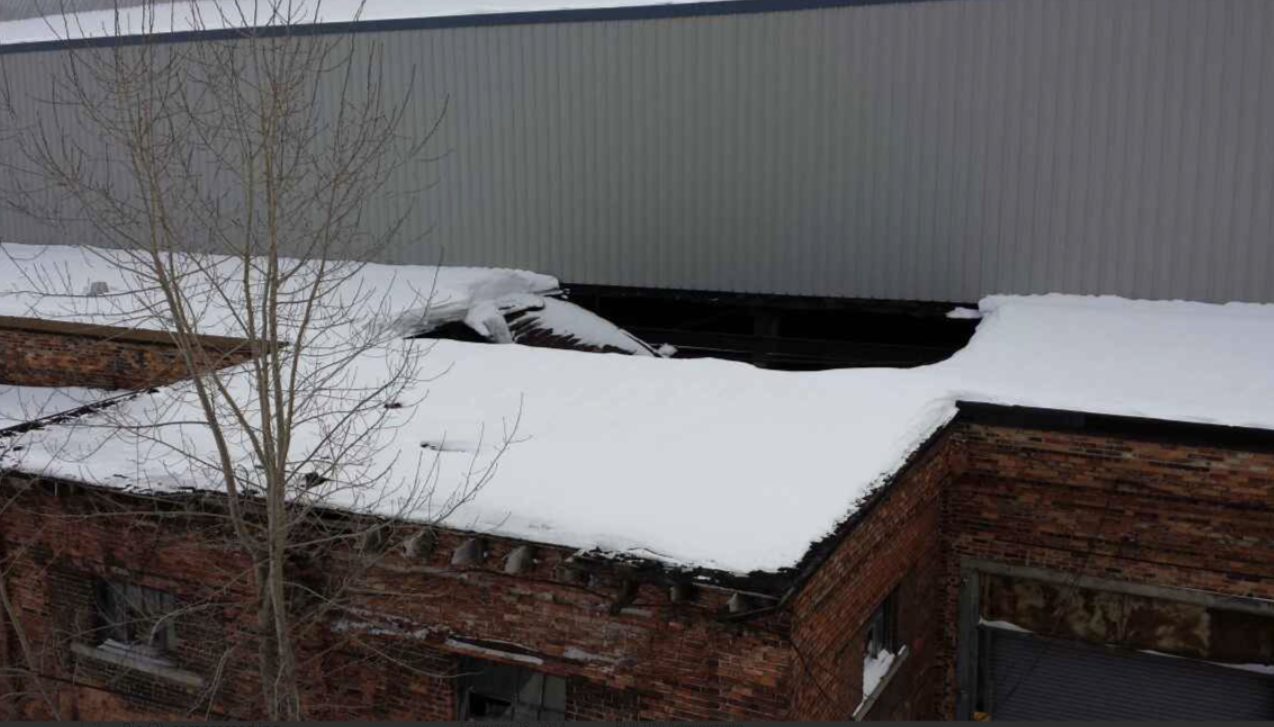
In 2014, West Michigan experienced widespread roof collapses after prolonged snow accumulation and repeated winter storms.
Failures occurred across:
- Large commercial and manufacturing facilities
- Big-box retail buildings
- Warehouses and distribution centers
Many of these buildings showed no dramatic exterior warning signs before failure. Some collapsed suddenly. Others experienced multiple failures across the same facility.
What made the difference wasn’t just how much snow fell — it was how long it stayed, how much water became trapped in snow and ice, and how many weather events stacked together.
Those lessons apply anywhere winter snow is a regular part of life.
Interior Warning Signs That Snow Load Has Become a Problem
You do not need to climb on the roof to recognize dangerous snow load conditions. In fact, some of the most important warning signs show up inside the building.
If you notice any of the following after heavy snowfall or freeze–thaw cycles, it’s time to pay attention.
Ceiling Changes You Didn’t Have Before
- Drop ceilings that appear bowed or sagging
- Ceiling grid systems that look distorted
- Ceiling tiles that unexpectedly fall out
These aren’t cosmetic issues. They can indicate structural deflection caused by excessive roof load.
Doors and Windows That Suddenly Don’t Behave
- Doors that used to close easily now stick or won’t latch
- Windows that are difficult to open or close
- Frames that appear slightly out of square
Downward roof pressure doesn’t stay isolated at the roof. It transfers stress throughout the structure — and openings often show it first.
“It Was Fine Yesterday”
One of the most dangerous aspects of snow load risk is how quickly conditions can change.
Many buildings that failed in 2014 looked normal until shortly before collapse. Often, a single additional storm or a rain-on-snow event was the final trigger.
If something inside your building suddenly doesn’t look or function the same after winter weather, that change matters.
Why Drainage Plays a Bigger Role Than Most People Realize
Snow load risk doesn’t start in January. In many cases, it starts in the fall.
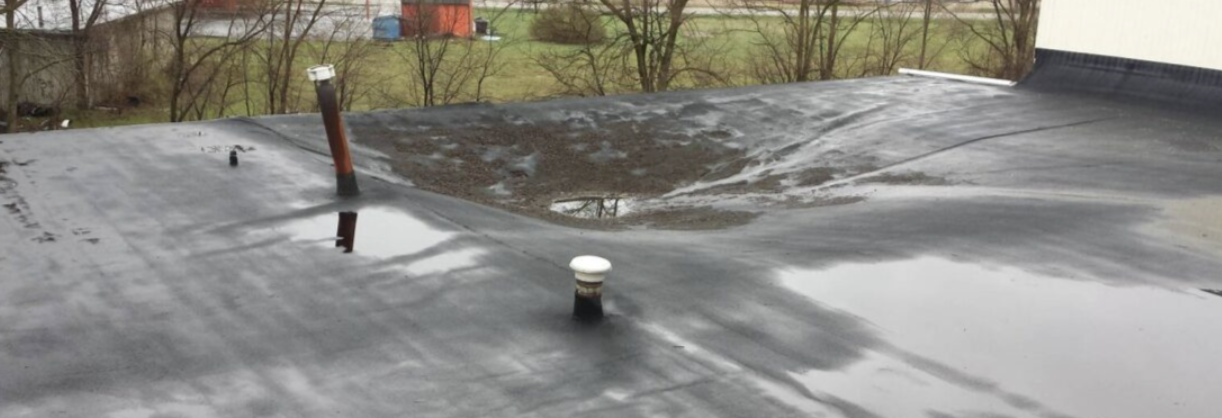
Flat roofs depend on clear, functional drains to move water off the system. If drains were partially blocked by debris before winter, snowmelt and rain have nowhere to go once freezing temperatures arrive.
That can lead to:
- Water trapped beneath snow
- Ice buildup around drains
- Added weight that doesn’t go away between storms
This is why ongoing roof maintenance — especially drain inspection and cleaning — plays such an important role in winter performance. Buildings that entered winter with compromised drainage are simply more vulnerable when heavy snow arrives.
Why “It’s Held This Much Before” Can Be Misleading
Another common assumption is:
“The roof has handled this amount of snow before.”
Snow load is cumulative. Weather patterns vary. One winter is never exactly like the last.
A roof may tolerate weeks of accumulation — until one rain event or partial thaw introduces new weight that pushes conditions past a threshold.
The absence of visible damage yesterday does not guarantee safety tomorrow.
When to Call for a Snow Load Risk Assessment
This is where professional evaluation matters.
If you observe:
- Changes to ceilings or ceiling grids
- Doors or windows behaving differently
- Prolonged snow accumulation combined with poor drainage
- Structural changes that appear after major winter events
…it’s time to call a commercial roofing professional for a snow load risk assessment.
This isn’t about guarantees or calculations. It’s about experienced eyes evaluating real-world conditions before a problem turns into a failure.
A Practical Way to Think About Snow on a Flat Roof
Instead of asking, “How much snow is too much?” ask:
- Has snow been accumulating for an extended period?
- Have there been multiple storms without meaningful melt?
- Has rain fallen on top of existing snow?
- Has anything inside the building changed that never did before?
If the answer to any of those questions is yes, awareness and timing matter.
A Final Word from the Field
At Weather Shield Roofing Systems™, we’ve walked through buildings after collapses and stood in facilities where warning signs were missed because everything “looked fine.”
Winter doesn’t send polite notices. Snow load failures often happen quietly — until they don’t.
If something inside your building changes after a major winter event, trust what you’re seeing and have it evaluated. That’s not overreacting. That’s responsible ownership.
If you’re concerned about snow load on your flat roof or want a professional assessment, you can reach out to Weather Shield Roofing Systems™ here:
https://weathershieldusa.com/contact-us/

Kyle Bruinsma
Account Executive
Since 2019, Kyle Bruinsma has delivered high-quality, cost-effective commercial roofing solutions at Weather Shield Roofing Systems. As both a roofing professional and commercial property investor, he brings a unique perspective to each project—treating every building like his own. Kyle values the strong team culture at Weather Shield, where everyone works together to keep customers dry.
