
TPO vs. EPDM: Which Is Better for Your Commercial Building?
The EPDM versus TPO roofing question sounds like it should have a simple answer. Pick the better material, install it, and move on to the next item in the capital budget.
Commercial roofing is rarely that cooperative.
EPDM and TPO are both widely used single-ply roofing membranes. Both can protect a commercial building for many years when the complete system is properly designed, installed, drained, and maintained. Both can also disappoint an owner when important details are ignored.
Weather Shield Roofing Systems™ has spent more than 45 years helping commercial property owners evaluate roofing systems. The honest answer is that neither membrane is automatically better for every building. The right choice depends on climate, insulation, roof layout, building use, drainage, attachment method, maintenance plans, and long-term ownership goals.
What is the Direct Answer?
EPDM may be a strong choice when you want a flexible rubber membrane with a long field history and excellent repairability.
TPO may be a strong choice when you want a light-colored reflective surface and heat-welded seams.
That comparison is useful, but it is not enough to select a roof. A membrane is only the top layer of a larger assembly. Insulation, vapor control, cover board, attachment, flashing, drains, edge securement, installation quality, and maintenance all affect performance.
Choosing a membrane while ignoring the rest of the system is like choosing a truck based only on the paint color.
What are EPDM Rubber Roofing Systems?
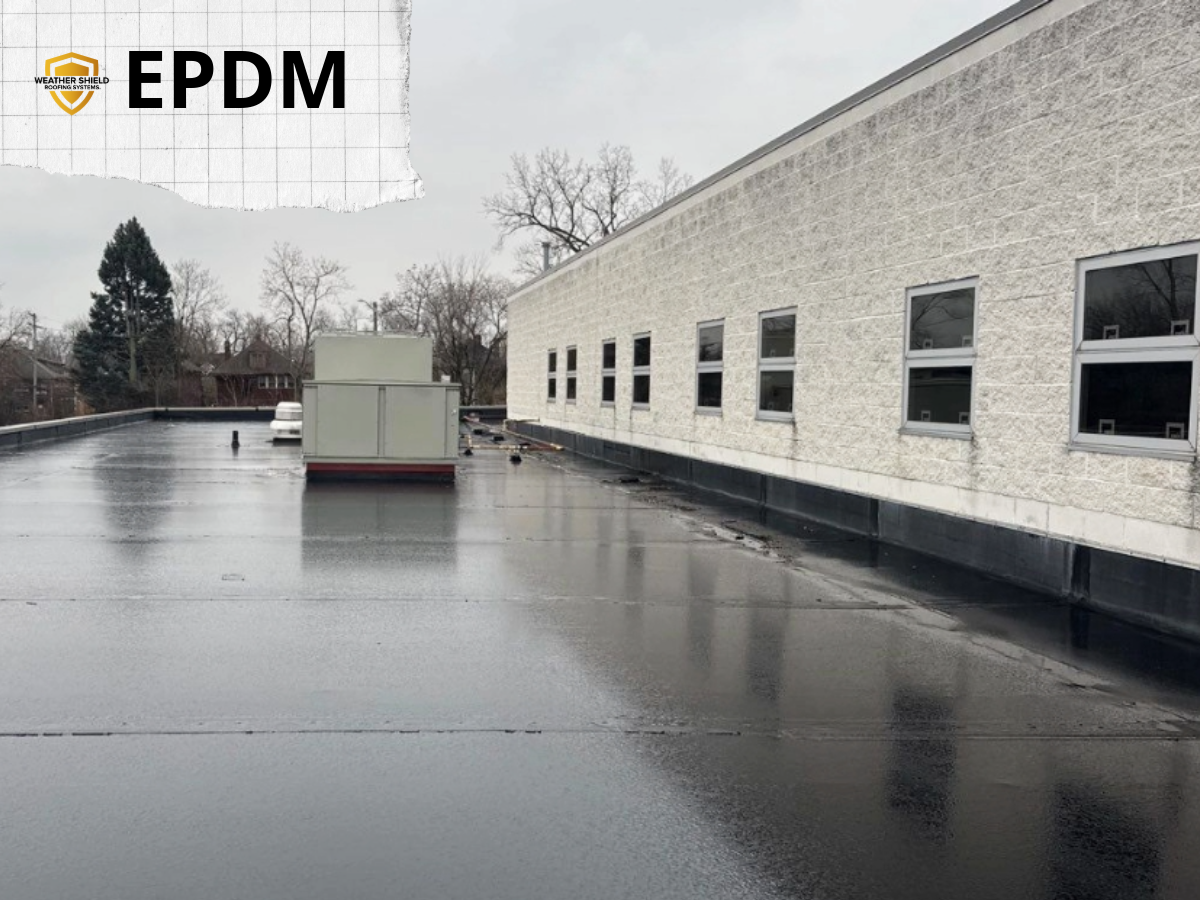
EPDM stands for ethylene propylene diene monomer. Most building owners simply call it rubber roofing.
EPDM rubber roofing systems use a flexible thermoset membrane, traditionally black, although white EPDM products are also available. The membrane may be fully adhered, mechanically attached, or held in place with ballast, depending on the approved roof design.
Seams and flashing are normally completed with compatible tapes, primers, adhesives, and accessory materials. Because those connections depend heavily on preparation and workmanship, trained installation matters.
EPDM has been used on commercial roofs for decades. It remains popular because it is flexible, relatively simple in composition, and capable of being repaired and restored when the existing material is properly cleaned and prepared.
What is TPO Roofing?
TPO stands for thermoplastic polyolefin. It is also a single-ply membrane used on flat and low-slope commercial roofs.
For a deeper look at how the material works, see our TPO Roofing Guide: Everything You Need to Know.
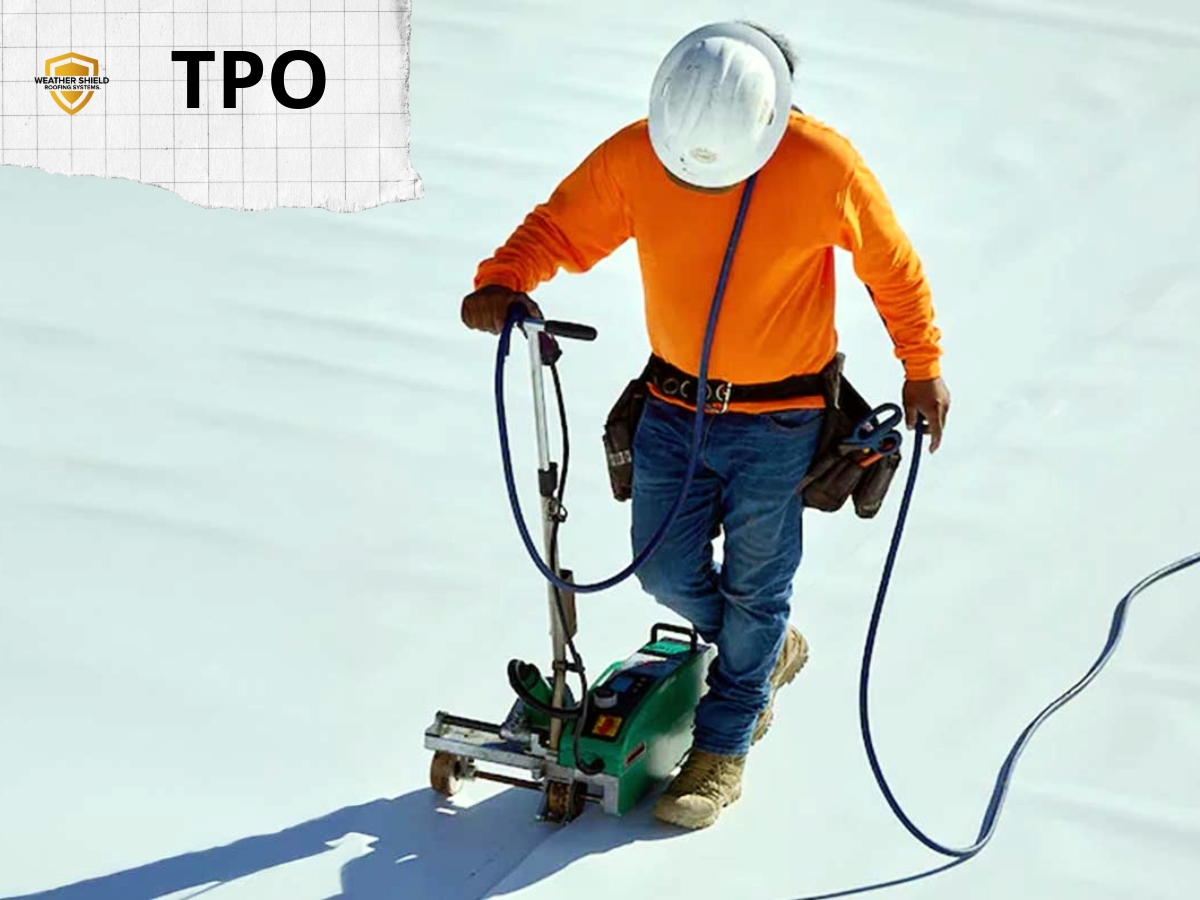
TPO membranes are often white or light colored, although other colors are available. The lighter surface reflects more solar energy than a traditional black membrane, which can reduce roof-surface temperature and may help lower cooling demand in some buildings.
TPO seams are joined with hot-air welding. The heat softens the membrane surfaces, so they fuse together as they cool. When the membrane is clean, the equipment is properly adjusted, and the technician uses the right speed and temperature. The result is a strong seam.
GAF describes TPO as a reflective single-ply system with heat-welded seams, while also emphasizing that roof design and installation affect long-term performance. You can also read our overview of what TPO roofing is and how it performs.
Is EPDM or TPO Better for Hot Weather?
TPO often has the advantage when reducing solar heat gain is a major goal.
A light-colored TPO membrane reflects more sunlight than traditional black EPDM. That can be useful on air-conditioned buildings in warm, sunny climates, especially when the roof represents a large portion of the building envelope.
However, membrane color is only one factor. Insulation levels, air leakage, HVAC efficiency, internal heat loads, utility rates, roof size, and local climate all affect actual energy use.
Black EPDM absorbs more heat. That may be a disadvantage during a hot summer, but the energy picture can be different in colder climates or buildings with different heating and cooling demands. White EPDM is also available when an owner wants EPDM characteristics with a lighter surface.
A roofing contractor should evaluate the building, not just repeat that white is cool and black is hot.
Does EPDM Perform Better in Cold Climates?
EPDM is known for remaining flexible in low temperatures, which is one reason it has a long history in regions with cold winters.
That flexibility helps the membrane accommodate normal building and material movement. But cold-weather performance still depends on proper fastening, secure edges, reliable flashing, good drainage, suitable adhesives, and correct installation conditions.
TPO can also be designed for cold climates. The decision should not be reduced to a weather map. Insulation, wind exposure, snow loads, rooftop traffic, drainage, warranty design, and contractor experience all belong in the discussion.
EPDM is often attractive in colder regions, while TPO’s reflectivity may be especially valuable in hotter climates. It also stresses that both systems can perform across a wide range of environments when the complete roof is designed correctly.
Which Roofing System Has Better Seams?
TPO seams are heat welded. EPDM seams are commonly joined with tape or adhesive products.
That makes the seam technologies different, but it does not make one immune to workmanship problems.
A TPO weld can fail if the membrane is dirty, the welding temperature is wrong, or the technician moves too quickly. An EPDM seam can fail if the surface is not properly cleaned and primed, the tape is stretched, or pressure is not applied correctly.
Flashings, drains, curbs, walls, and penetrations often create greater risk than long, open-field seams. A neatly installed membrane can still leak if the difficult details were rushed.
The better seam is the one that was designed properly, installed by trained people, inspected, and maintained.
What Does EPDM Roof Repair Involve?
EPDM roof repair begins with identifying the defect and determining whether water has entered the insulation.
The damaged membrane is cleaned and prepared. The technician then installs compatible primer, seam tape, flashing, or patch material according to the roof-system requirements. Open seams, punctures, wall flashing, drains, and pipe penetrations can often be repaired without replacing the entire roof.
If insulation beneath the repair is wet, the repair may require cutting out the affected assembly, replacing the insulation, and installing new membrane over the area.
EPDM’s ability to accept properly prepared repair material is one of its strongest practical benefits. The EPDM Roofing Association identifies repairability as a major characteristic of the system and provides technical guidance for restoring aged EPDM roofs.
The important phrase is “properly prepared.” New patch material will not perform well over dirt, biological growth, moisture, incompatible coatings, or old repair products that have not been addressed.
Is TPO Difficult to Repair?
TPO is also repairable.
A technician will normally clean and prepare the damaged area before heat welding a compatible patch over the membrane. Repairs may also involve replacing wet insulation and rebuilding flashing around a curb, drain, wall, or penetration.
The existing membrane’s condition affects the work. Aged or heavily contaminated TPO may require more preparation before a reliable weld can be made. Testing the weld and following the manufacturer’s repair procedures are important.
With either system, the larger question is whether the problem is truly isolated. A good patch is valuable. A good patch on a roof with widespread hidden moisture is only one small part of the answer.
Check out our guide to commercial roof repairs, which explains how inspections and moisture detection can help identify problems beyond the visible leak.
Which System Lasts Longer?
There is no responsible universal winner.
EPDM has a longer field history, and many EPDM roofs have delivered decades of service. TPO is newer by comparison, but modern TPO systems are widely used and can provide strong long-term performance.
Commercial roof lifespan depends on membrane thickness, product quality, installation, climate, drainage, insulation, rooftop traffic, maintenance, and how quickly damage is repaired.
A roof that receives regular commercial roof maintenance and timely repairs will usually have a better chance of reaching its intended service life than a roof that is ignored until water enters the building. The logo on the membrane does not clean drains or repair punctures.
Is EPDM or TPO Less Expensive?
Either material may produce the lower proposal on a particular project.
The membrane itself is only part of the commercial flat roof replacement cost. Tear-off, insulation, cover board, attachment, roof access, perimeter securement, drainage work, equipment curbs, membrane thickness, warranty length, and labor can affect the total more than the difference between EPDM and TPO material prices.
A large, open roof may favor one installation method. A roof crowded with equipment and penetrations may favor another. Existing substrate conditions can also affect compatibility and preparation.
Compare complete assemblies with equivalent insulation, details, warranty coverage, and removal assumptions. Otherwise, you are not comparing EPDM versus TPO roofing. You are comparing two different scopes that happen to use different membranes.
Which Roof is Better for Buildings With Heavy Foot Traffic?
Neither membrane should be treated like a sidewalk.
Both EPDM and TPO can be damaged by dropped tools, sharp equipment, dragging materials, and repeated traffic. Walk pads should be installed between roof access points and frequently serviced HVAC equipment.
Facility teams should control rooftop access and require contractors to report damage. A small puncture found immediately is usually manageable. A small puncture that allows water into the insulation for two years is a much different project.
This is one reason preventative commercial roof maintenance matters. Routine inspections give facility teams an opportunity to find punctures, drainage problems, and other small defects before they become larger repairs.
What Questions Should You Ask Before Choosing?
Start with the building rather than the product brochure.
Ask how the building is used, how long you plan to own it, whether the interior is climate controlled, how much rooftop equipment is present, how often technicians access the roof, and whether the existing drainage works.
Then ask the roofing contractor to explain the proposed insulation, cover board, membrane thickness, attachment method, flashing design, edge securement, drainage corrections, warranty, maintenance requirements, and repair process.
A thorough commercial roof inspection can help establish the existing roof condition and uncover moisture, drainage, seam, flashing, and other issues that may influence which roofing system makes the most sense.
Finally, ask why the recommended membrane is better for this building. “We install a lot of it” is not a building-specific answer.
So…is EPDM or TPO the Better Choice?
EPDM may be the better choice when proven rubber-roof performance, flexibility, and future repairability fit the building’s needs.
TPO may be the better choice when a reflective surface and heat-welded seams align with the building’s climate and energy goals.
Sometimes either system can perform well, and the contractor, design, and maintenance plan become the deciding factors.
Weather Shield Roofing Systems™ works with owners to evaluate the complete roof rather than pushing one membrane for every building. After installation, proactive programs such as Max Life™ Roof Care can also help owners protect their roofing investment through inspections, maintenance, repairs, and long-term planning.
To compare EPDM, TPO, and other commercial roofing options for your property, schedule an inspection with Weather Shield Roofing Systems.

Kyle Bruinsma
Account Executive
Since 2019, Kyle Bruinsma has delivered high-quality, cost-effective commercial roofing solutions at Weather Shield Roofing Systems. As both a roofing professional and commercial property investor, he brings a unique perspective to each project—treating every building like his own. Kyle values the strong team culture at Weather Shield, where everyone works together to keep customers dry.