
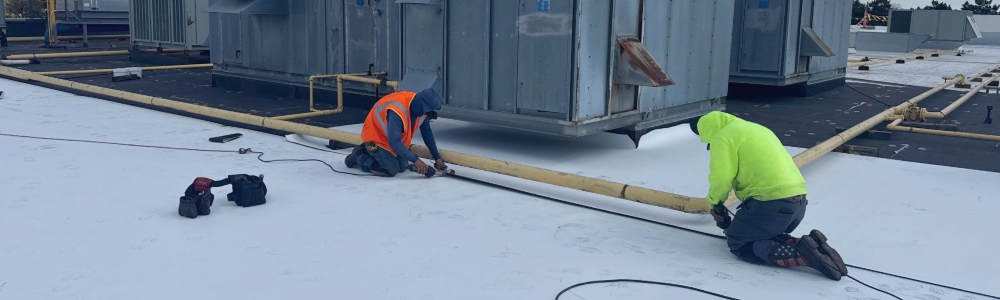
How Do You Repair a Low-Slope Commercial Roof?
A leak on a low-slope roof rarely arrives with a polite introduction. More often, it shows up as a ceiling stain, a mysterious drip near a light fixture, or a puddle that appears every time the forecast turns gray.
That is when the questions start.
Can the roof be repaired? Is the insulation wet? Do we need a complete replacement? And how much is this going to cost?
Those are reasonable concerns. We have spent more than 45 years helping property managers, investors, and building owners answer them.
The direct answer is this: Low-slope roof repair begins with finding the actual source of the problem, determining how far the moisture has traveled, and using repair materials that are compatible with the existing roofing system.
That sounds simple. Sometimes it is. Sometimes the stain in the ceiling is 30 feet away from the hole in the roof.
Water is talented that way.
What is a Low-Slope Roof?
A low-slope roof is a roof that appears nearly flat but has a slight pitch designed to move water toward drains, gutters, or scuppers. These roofs are common on commercial buildings, warehouses, apartment complexes, retail centers, offices, and industrial facilities.
Unlike steep roofs, low-slope systems do not rely mainly on gravity to shed water quickly.
They depend on several parts working together:
- The roofing membrane
- Seams and fasteners
- Flashing
- Roof drains and scuppers
- Insulation
- Edge metal
- Penetrations around pipes and equipment
- The underlying roof deck
When one part fails, water can enter the system and travel beneath the membrane. That is why effective low-slope roof repair requires more than spreading sealant around the first suspicious-looking spot.
What are the Signs a Low-Slope Roof Needs Repair?
Some roof problems are obvious. Others quietly grow beneath the surface until the repair bill gets bigger.
Common warning signs include:
- Water stains on ceilings or walls
- Active dripping during or after rain
- Ponding water on the roof
- Open, lifted, or cracked seams
- Loose flashing or edge metal
- Blisters or bubbles in the membrane
- Soft areas underfoot
- Damaged roof penetrations
- Wet or moldy odors inside the building
- Repeated leaks in the same general area
- Debris blocking drains or scuppers
A leak does not automatically mean the roof needs to be replaced. Many problems can be corrected with targeted roof leak repair, especially when the damage is caught early.
However, the longer moisture remains inside the system, the greater the chance it will affect insulation, decking, ceilings, electrical equipment, inventory, or tenant spaces.
Why is a Professional Roof Inspection so Important?
The visible symptom is not always the source.
Water may enter through damaged flashing around an HVAC unit, move beneath the membrane, follow a roof deck seam, and finally appear inside the building far from the original opening.
A professional commercial roof inspection looks beyond the interior stain.
The roofing contractor should examine:
- Membrane condition
- Seams and terminations
- Flashing
- Roof penetrations
- Drains and drainage paths
- Parapet walls
- Rooftop equipment
- Previous repairs
- Areas of ponding water
- Signs of trapped moisture
The inspection should help answer four basic questions:
- Where is the water entering?
- How much of the roof has been affected?
- What caused the failure?
- Is repair, restoration, or replacement the most practical option?
A trustworthy contractor should explain the findings in plain language. You should not need a roofing dictionary and a structural engineering degree to understand what is happening over your head.
Can Ponding Water Damage a Low-Slope Roof?
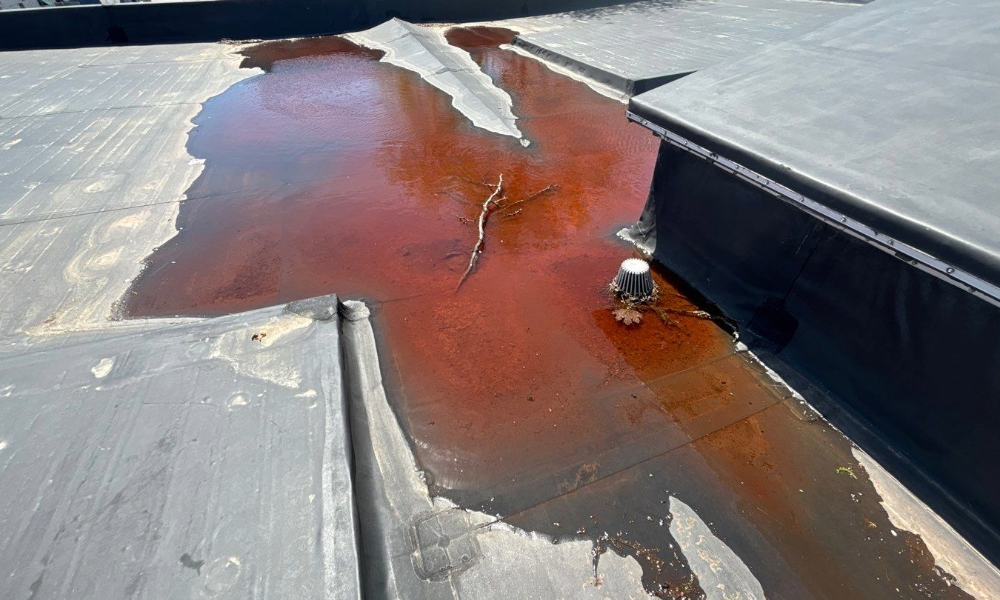
Yes. Ponding water can shorten the life of a low-slope roof and increase the likelihood of leaks.
Water may collect because of:
- Clogged drains
- Blocked scuppers
- Settled insulation
- Poor original slope
- Structural movement
- Debris buildup
- Damaged drainage components
A shallow puddle after a heavy storm does not always mean the roof is failing. The bigger concern is water that remains long after the weather clears or returns to the same location after every rainfall.
Standing water can collect dirt, encourage vegetation growth, stress seams, speed up membrane deterioration, and add unnecessary weight to the roof structure.
The proper fix depends on the cause. The solution might be as simple as clearing a drain. More involved repairs may require tapered insulation, drain modifications, or localized reconstruction.
This is another reason diagnosis matters. A bucket of roof coating will not correct a drainage problem.
Where Do Low-Slope Roof Leaks Usually Start?
Many commercial roof leaks begin at details, transitions, and penetrations rather than in the open field of the membrane.
Common trouble spots include:
- HVAC curbs
- Plumbing vents
- Exhaust pipes
- Roof drains
- Skylights
- Roof hatches
- Parapet walls
- Coping caps
- Edge metal
- Expansion joints
- Equipment supports
- Satellite or communication mounts
These areas deal with movement, temperature changes, vibration, foot traffic, and concentrated water flow. Sealants age. Metal shifts. Seams separate. Technicians drop tools.
None of this means somebody necessarily did a bad job. It means roofs live outside, where the sun, rain, wind, snow, and rooftop service crews all take turns testing them.
Routine roof maintenance helps identify these problems before they become active leaks.
Why Do Repair Materials Need to Match the Roof?
Commercial roofs are not all made from the same material.
Common low-slope roofing systems include:
- TPO
- EPDM
- PVC
- Modified bitumen
- Built-up roofing
- Metal roofing
- Coated roof systems
Each system has its own repair methods. A product that works well on one membrane may fail to bond to another. In some cases, incompatible chemicals can damage the existing roof.
For example, a TPO repair may require proper cleaning, preparation, and heat welding. An EPDM repair may require compatible primer, adhesive, and patch material. Modified bitumen repairs may involve different surface preparation and application techniques.
Before approving a low-slope roof repair, ask:
- What type of roof system do we have?
- What caused the damage?
- What materials will be used?
- Are those materials compatible with the existing roof?
- Will the repair address the cause or only cover the symptom?
- Is the repair covered by a workmanship warranty?
- Could the work affect an existing manufacturer’s warranty?
- Clear answers are a good sign. Foggy answers usually remain foggy until it rains.
When is Repair Better Than Roof Replacement?
Repair is often the right choice when the roof is generally serviceable and the damage is limited.
A commercial roof may be a good candidate for repair when:
- The leak source is isolated
- Most of the membrane remains in good condition
- Wet insulation is limited to a small area
- The flashing can be restored
- The seams can be repaired
- The roof still has useful service life
- The building owner has not experienced repeated failures
Replacement or restoration may make more sense when:
- Leaks are widespread
- Large areas of insulation are saturated
- The membrane is brittle, shrinking, or badly deteriorated
- Repairs are becoming frequent
- The roof is near the end of its expected lifespan
- Drainage or structural problems are extensive
- Repair costs are no longer producing dependable results
The goal is not to repair a roof forever. The goal is to make the most responsible use of the owner’s money.
Sometimes that means completing a targeted repair. Sometimes it means planning a restoration. And sometimes the honest answer is that another patch would only delay the inevitable.
How Can Roof Maintenance Prevent Emergency Repairs?
Preventive roof maintenance is usually less disruptive and less expensive than emergency roof repair.
A practical maintenance program should include:
- Scheduled roof inspections
- Drain and scupper cleaning
- Debris removal
- Seam and flashing checks
- Inspection of rooftop penetrations
- Documentation with photographs
- Minor repairs before damage spreads
- Follow-up inspections after severe weather
- Roof checks after HVAC or mechanical work
Our Max Life™ Roof Care approach is designed to help building owners understand roof condition, correct manageable problems, and plan future expenses before a leak forces the decision.
Good records also make budgeting easier. Instead of guessing when the roof may need major work, you can make decisions using inspection findings, repair history, moisture conditions, and the remaining roof lifespan.
What Should You Do When You Discover a Roof Leak?
Start by protecting people, equipment, inventory, and interior spaces. Move vulnerable items when it is safe to do so, place containers under active drips, and document the damage with photos.
Do not send an untrained employee onto a wet roof. Low-slope roofs can be slippery, and water may hide soft or damaged areas.
Then contact an experienced commercial roofing contractor for an inspection. Provide as much information as possible, including:
- When the leak began
- Whether it happens during every rain
- Where the water appears
- Photos of interior damage
- The roof’s approximate age
- Known repair history
- Recent rooftop work
That information can help the contractor narrow the search and respond more efficiently.
The Bottom Line on Low-Slope Roof Repair
A small roof problem is rarely improved by giving it more time.
Prompt low-slope roof repair can stop moisture from spreading, protect insulation and interior spaces, and extend the useful life of a commercial roofing system. The key is to identify the real source, repair it with compatible materials, and address drainage or maintenance issues that contributed to the failure.
Weather Shield Roofing Systems™ has helped commercial property owners protect their buildings for more than 45 years. Our job is to help you understand the condition of your roof, compare your options, and make a cost-efficient decision without unnecessary pressure.
If your building has a leak, ponding water, damaged flashing, or recurring roof problems, contact Weather Shield Roofing Systems™ to schedule an inspection and get a clear plan for the next step.

Kyle Bruinsma
Account Executive
Since 2019, Kyle Bruinsma has delivered high-quality, cost-effective commercial roofing solutions at Weather Shield Roofing Systems. As both a roofing professional and commercial property investor, he brings a unique perspective to each project—treating every building like his own. Kyle values the strong team culture at Weather Shield, where everyone works together to keep customers dry.