
What Leadership in Commercial Roofing Really Looks Like
(And Why Most Businesses Get Stuck Without Knowing It)
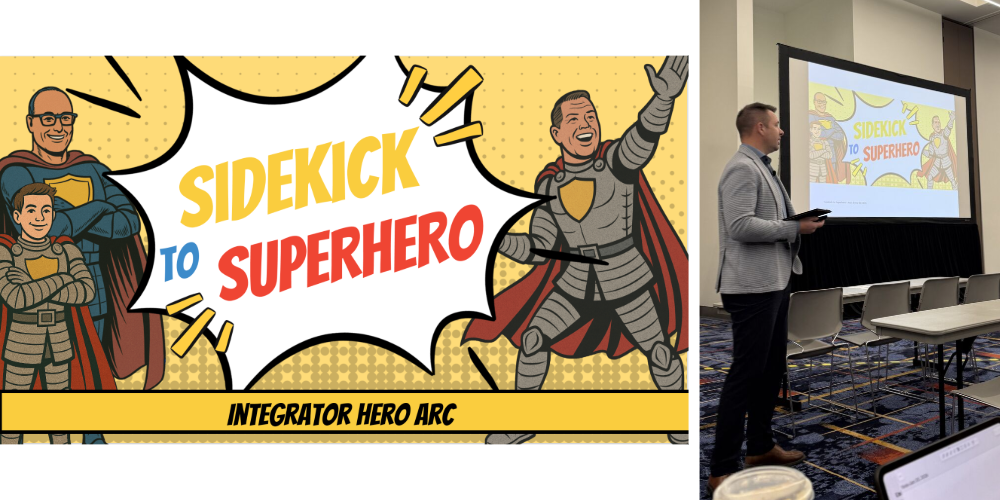
I was asked recently to give a talk on leadership. Not the buzzword version. Not the kind you find stitched on a pillow or slapped on a LinkedIn post. Real leadership—the kind that either moves a business forward or quietly holds it back.
Because when leadership capacity runs out, growth doesn’t usually crash. It stalls. Quality slips. Good people get frustrated. And owners carry more than they should—often without realizing why.
At Weather Shield, our purpose is simple: elevate people every time. That’s been true for more than 40 years, and it’s personal for me. I’ve lived the wins, the stalls, and the mistakes that come with trying to grow a company while growing yourself at the same time.
In this session, I wanted to do three things:
- Clearly define what leadership actually is
- Explain why good owners and good people still get stuck
- Offer a practical prescription to move forward
Because most businesses don’t fail due to bad intentions. They stall because leadership capacity—and mental bandwidth—gets used up.
Let’s talk about that.
What Leadership Actually Is (And What It Isn’t)
Here’s the simplest definition I know:
A leader takes people where they could not—or would not—go on their own, accepts responsibility for helping them get there, and doesn’t write people off when they struggle along the way.
That last part matters.
Leadership isn’t about being liked. It’s about challenging good people to take the next step—even when it’s uncomfortable for them and for you.
And here’s the part that’s hard to hear:
If you’re a business owner or a leader and you want your people to grow, you have to grow first. You don’t get to wait on them to take the next step while you stay right where you are.
Organizations cannot grow beyond the capacity of their leader. Period.
Why So Many Owners and Leaders Get Stuck
The real problem that slows down nearly every owner and leader on the planet isn’t effort. It’s mental burden.
Mental burden is the weight of decisions, tasks, approvals, and problems that flow through one person—usually the owner—until their capacity is maxed out.
At first, that person is the bottleneck because they’re good at everything. Eventually, they’re the bottleneck because they’re involved in everything.
When too many low-altitude tasks run through one person, mental burden increases. When capacity runs out, the business stops growing.
And that’s how good businesses with good people quietly stall.
The Real Role of a “Number Two”
A lot of owners think they have a strong second-in-command. Many don’t.
A true number two has one primary job:
Reduce the owner’s mental burden and raise the altitude of the issues they deal with.
If someone requires constant oversight, constant clarification, or constant conflict resolution, they’re not reducing mental burden—they’re adding to it.
That’s not a knock on the person. It’s a clarity issue.
Whether you’re a business owner, a project manager, or a foreman on a roofing crew, mental burden is reduced the same way:
- You give people real ownership
- You define what “done” looks like
- You communicate expectations clearly
- You close the loop
We call this defining the win.
When people know exactly what success looks like—and are trusted to pursue it—leaders get their capacity back.
The Career Loop Most Leaders Get Stuck In
Over the course of our careers, we all move through the same progression—multiple times, in different roles:
- You start as a producer doing the work
- You learn to lead the work
- You coordinate the work
- You lead people—coaching, correcting, developing
- You build or run systems
- You truly own outcomes
Career and company breakdowns happen when the role changes—but the leader doesn’t.
That happened to me.
The Year I Got Stuck (And What It Taught Me)
In 2016, Weather Shield had quality issues. Roofs were leaking. That’s about as serious as it gets in our world.
At first, it felt like a people problem. It wasn’t.
It was a systems problem.
I realized I was stuck in a loop—trying to solve recurring issues without building a repeatable solution. Here’s the rule I learned the hard way:
If a problem, its cause, and its solution keep repeating, it deserves a named system.
Once we identified and built the right systems, quality stabilized—and the business could move forward again.
But that required me to let go of old ways of thinking and fully step into the role the company needed me to be in.
The Three Villains That Hold Leaders Back
In the session, I talked about three common “alter ego villains.” These aren’t bad people. They’re identity traps.
- “I’m Just a Roofer”
This is getting stuck in your past role.
When someone identifies themselves by what they used to do instead of the role they’re in now, it’s a signal they haven’t fully accepted responsibility for the new work required of them.
You can’t own outcomes you don’t believe belong to you.
- The Cash Flow Cowboy
This person knows the field inside and out but avoids financial responsibility.
They unintentionally push financial understanding onto others, which limits their own growth—and the company’s.
You can’t lead a business you don’t understand financially.
- The Department King
This is the leader who still thinks in silos.
They advocate for “their” department instead of the whole company, forcing the owner to constantly mediate conflicts.
This is often the single biggest source of mental burden for owners.
A true leader sees the whole system—not just their piece of it.
The Real Challenge I Left the Room With
The challenge wasn’t complicated.
Have more intentional conversations with the people who report to you.
Give them total clarity about what success looks like. Challenge them to step into responsibilities they may not yet be comfortable with.
A simple place to start: identify one recurring issue that keeps landing back on your desk—and decide whether it needs clearer ownership or a real system.
When you reduce mental burden, you free yourself to lead at the level your organization actually needs.
Why This Matters at Weather Shield
Commercial roofing is hard work. It demands precision, accountability, and systems that work even when conditions don’t.
Leadership is no different.
At Weather Shield Roofing Systems™, we’ve spent over four decades learning that strong systems, clear expectations, and honest leadership are what protect investments—whether that investment is a roof, a company, or a person.
If you’re a building owner, a property manager, or a business leader trying to grow without burning out, these principles matter. They’re the same ones that allow us to deliver reliable commercial roofing services, long-term roof maintenance programs, and systems like Max Life Roof Care that actually extend roof lifespan.
Growth—whether of roofs or people—doesn’t happen by accident.
Final Thoughts
Leadership isn’t about control. It’s about capacity.
When leaders grow, businesses grow. When leaders get stuck, everything else does too.
If you want help working with a team that understands systems, ownership, and long-term thinking—not just quick fixes—we’re here.
You can start a conversation with us anytime at:


Andy Byma
President