
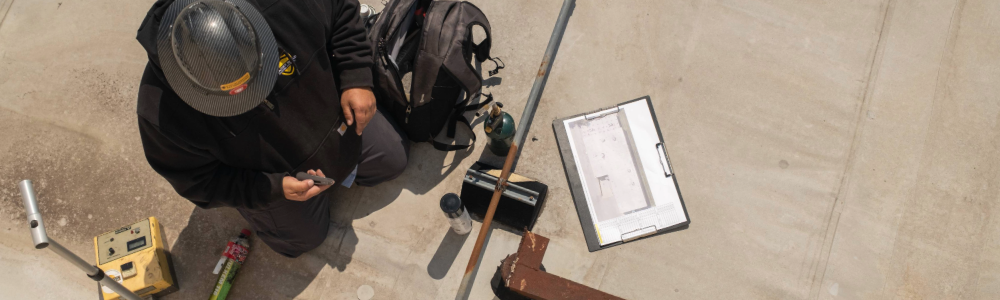
How Nuclear Moisture Scanning Can Save You Thousands on Roof Replacement
If you’re responsible for a commercial building, you’ve probably wondered: Do I really need to replace my entire roof, or is there a smarter, more cost-effective option?
At Weather Shield Roofing Systems, we’ve been helping businesses answer questions like this for over 45 years. One of the most powerful tools we use to protect your roof investment and avoid unnecessary costs is nuclear moisture scanning. And the best part? It can save you thousands by preventing full roof replacement when it’s not truly needed.
Let’s break it down in simple terms so you can understand how this technology works and why it matters.
What Is Nuclear Moisture Scanning?
Nuclear moisture scanning is a non-invasive way to detect hidden moisture trapped inside your commercial roofing system.
Instead of tearing into your roof to find leaks or water damage, this technology uses a specialized device that measures moisture levels beneath the surface. It works by detecting hydrogen atoms, which are present in water, allowing us to map out exactly where moisture exists within your roof.
In simple terms, think of it like a high-tech moisture detector that scans your roof without damaging it.
Why Is Hidden Moisture Such a Big Problem?
One of the biggest challenges with commercial roofing is that water damage isn’t always visible.
You might see a small roof leak inside your building, but the actual problem on the roof could be much larger. Moisture can spread underneath the roofing membrane, soaking insulation, and weakening the structure over time.
If left unchecked, this hidden moisture can:
- Shorten your roof lifespan
- Increase energy costs due to wet insulation
- Lead to structural damage
- Cause recurring roof leaks
- Result in premature full roof replacement
That’s why accurate roof inspections are so important. You need to know exactly what’s happening beneath the surface before making costly decisions.
How Does Nuclear Moisture Scanning Work?
The process is straightforward and doesn’t disrupt your operations.
A trained technician walks your roof with a handheld scanner. The device sends out low-level radiation and measures how it interacts with the materials below. Since water contains hydrogen, areas with moisture show up clearly in the scan results. After scanning, we create a detailed moisture map of your roof.
This map shows:
- Dry areas that are still in good condition
- Wet areas where damage exists
- The extent of moisture spread
This allows us to make precise, informed decisions about your roof maintenance or repair strategy.
Can Nuclear Moisture Scanning Really Save Money?
Yes, and this is where it becomes a game changer for commercial property owners.
Without moisture scanning, many roofing contractors take a conservative approach. If there’s uncertainty about how much of the roof is damaged, they may recommend a full tear-off and replacement to avoid risk.
But that approach can be unnecessarily expensive.
With nuclear moisture scanning, we can target only the damaged sections of your roof.
Instead of replacing 100% of your roof, you might only need to replace 20% or 30%.
That means:
- Lower material costs
- Reduced labor expenses
- Faster project timelines
- Less disruption to your business
This targeted tear-off approach is one of the most effective ways to achieve real roof cost savings while still protecting your building.
What Is a Targeted Tear-Off?
A targeted tear-off means removing and replacing only the areas of your roof that are actually damaged by moisture.
Here’s how it works:
- We perform a nuclear moisture scan
- Identify exactly where water damage exists
- Remove only those affected sections
- Repair and restore those areas
- Preserve the rest of your roof that is still in good condition
This approach is far more efficient than tearing off the entire roof system when it’s not necessary.
It also extends the life of your existing roof, which is a key part of long-term roof investment protection.
Why Don’t Most Commercial Roofing Companies Offer This?
This is an important question, and the answer comes down to expertise, equipment, and commitment.
Nuclear moisture scanning requires:
- Specialized technology
- Proper licensing and safety training
- Experienced technicians who know how to interpret the data
Many commercial roofing companies simply don’t have the capability or choose not to invest in it. Instead, they rely on visual inspections or core samples, which can miss hidden moisture or only provide limited information.
At Weather Shield Roofing Systems, we believe in giving our clients clear, accurate data so they can make informed decisions about their roof.
That’s why we’ve made this technology part of our standard approach.
Related blog post:
Is Nuclear Moisture Scanning Included in the Cost?
Here’s where Weather Shield Roofing Systems truly stands apart: We offer nuclear moisture scanning at no additional cost to you.
That means you get:
- Advanced diagnostics
- Accurate moisture mapping
- Smarter repair recommendations
- Significant cost-saving opportunities
All without paying extra for the technology itself.
Our goal is simple: help you avoid unnecessary expenses while ensuring your commercial roofing system performs at its best.
How Does This Help With Roof Maintenance and Planning?
Nuclear moisture scanning isn’t just useful for immediate repairs. It’s also a powerful tool for long-term roof maintenance.
By understanding exactly where moisture exists, you can:
- Prioritize repairs before problems worsen
- Plan budgets more accurately
- Extend your roof lifespan
- Prevent emergency roof repair situations
This proactive approach is a key part of effective roof damage prevention.
It also aligns with programs like Max Life™ Roof Care, where ongoing inspections and maintenance help you get the most out of your roofing system.
What Types of Roofs Can Be Scanned?
Nuclear moisture scanning works on a wide range of commercial roofing systems.
- Flat roofs
- Low-slope roofs
- Built-up roofing systems
- Modified bitumen roofs
- Single-ply membranes
If your building has a commercial roof, there’s a good chance this technology can be used to assess its condition.
Is Nuclear Moisture Scanning Safe?
Yes, when performed by trained professionals, nuclear moisture scanning is safe.
The equipment uses very low levels of radiation and follows strict safety guidelines. Technicians are licensed and trained to handle the device properly, ensuring there is no risk to building occupants or the surrounding environment.
When Should You Consider a Nuclear Moisture Scan?
You don’t have to wait for a major issue to take advantage of this technology.
It’s especially useful if:
- You’re experiencing recurring roof leaks
- Your roof is aging and nearing the end of its lifespan
- You’re considering a roof replacement
- You want to reduce long-term roof costs
- You need a detailed roof inspection for budgeting or planning
In these situations, accurate data can make a significant difference in your decision-making process.
How Does This Protect Your Roof Investment?
Your commercial roof is one of the most expensive components of your building.
Making the wrong decision, like replacing the entire roof when only part of it is damaged, can cost tens or even hundreds of thousands of dollars unnecessarily.
Nuclear moisture scanning helps ensure you:
- Only pay for what truly needs to be fixed
- Avoid premature roof replacement
- Maximize the value of your existing system
- Make confident, data-driven decisions
It’s one of the smartest ways to protect your investment while maintaining the integrity of your building.
At Weather Shield Roofing Systems, we believe you deserve honest answers and cost-efficient solutions when it comes to your commercial roofing needs. Nuclear moisture scanning is just one of the ways we help you avoid unnecessary expenses and make informed decisions about your roof.
If you’re dealing with roof leaks, considering a replacement, or simply want a clearer picture of your roof’s condition, we’re here to help. Reach out to our team to schedule an inspection and see how much you could save.
Matt Case
Matt Case is Weather Shield’s Lead FRA, known for equal parts technical know-how and people-first leadership. He first joined Weather Shield in 2008 on an install crew, spending 3 years in the field. After eight years gaining additional experience elsewhere, Matt came back to Weather Shield, restarting as a service technician and working his way up through foreman, estimating, and a superintendent role in the service department. For the past 2+ years, he’s led and coached FRAs and field teams, focused on building up the people around him and passing on hard-earned knowledge across generations. What motivates him most is elevating his team—every day, every time.