
Roof Asset Management: The Smarter Alternative to Emergency Repairs
If you’re constantly dealing with leaks, unexpected repair bills, and uncertainty about your building’s roof, you’re not alone. Many facility managers and property owners feel like their commercial roofing system is a constant liability rather than something they can control. At Weather Shield Roofing Systems, we’ve been helping businesses for over 45 years, and we’ve seen firsthand how shifting to roof asset management changes everything.
Instead of reacting to problems, you can take control of your roof, your budget, and your long-term investment.
Why should I treat my commercial roof as an asset instead of a liability?
Too often, commercial roofing is viewed as a necessary expense. Something breaks, it leaks, and you fix it. But that mindset leads to higher costs, more stress, and a shorter roof lifespan.
Your roof is actually one of the most valuable components of your building. It protects everything underneath it: your operations, your inventory, your people, and your revenue.
When you treat your roof as an asset:
- You focus on roof lifespan extension
- You prioritize roof investment protection
- You make decisions based on long-term value, not short-term fixes
In my experience working with commercial clients, the goal is always to maximize roof life and avoid unnecessary spending or premature replacement.
That’s a completely different mindset than waiting for the next leak.
Why do emergency roof repairs cost more in the long run?
Emergency roof repair feels necessary in the moment. A leak shows up, you call someone, and you fix it. Problem solved, right?
Not exactly.
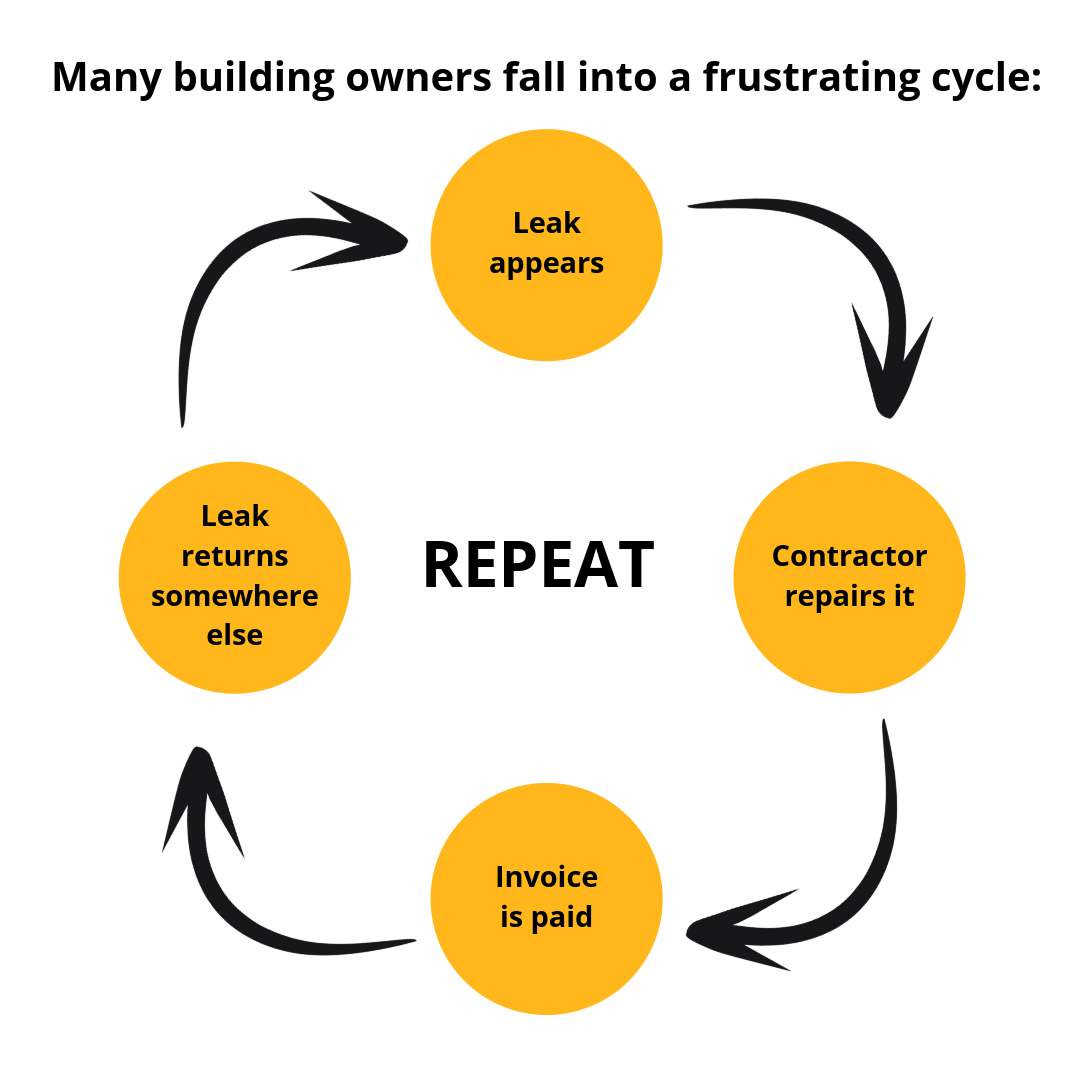
Many building owners fall into a frustrating cycle:
- Leak appears
- Contractor repairs it
- Invoice is paid
- Leak returns somewhere else
This reactive approach is one of the most common issues property managers face.
Here’s why it becomes expensive:
- You’re only addressing symptoms, not root causes
- Small issues grow into hidden water damage
- Repairs become more frequent and less effective
- You lose the ability to plan financially
In contrast, roof asset management focuses on identifying and solving underlying issues before they turn into emergencies.
What is roof asset management, and how does it work?
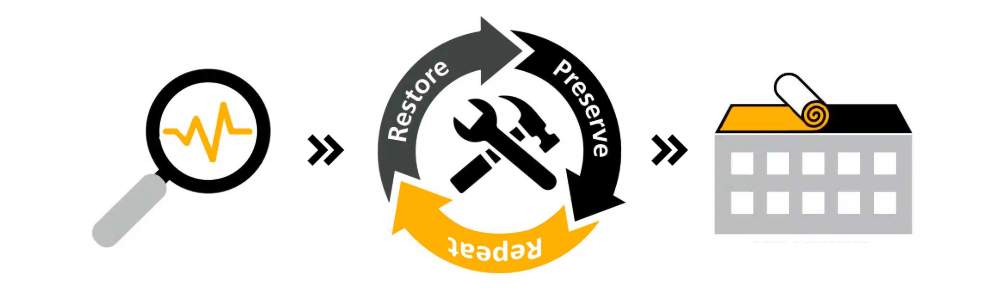
Roof asset management is a proactive approach to commercial roofing that combines:
- Regular roof inspections
- Preventative roof maintenance
- Long-term budget planning
- Data-driven decision-making
Instead of guessing what your roof needs, you rely on real information.
At Weather Shield, this often includes:
- Detailed inspection reports
- Moisture detection (including advanced scanning technology)
- Condition tracking over time
- Clear repair vs replacement recommendations
Many owners assume they need a full roof replacement simply because of age or leaks. But a thorough inspection often reveals more cost-effective ways to extend the roof’s life.
That’s where real savings begin.
How does roof asset management improve budget predictability?
One of the biggest challenges for facility managers is budgeting. Roofing costs can feel unpredictable and disruptive.
Asset management changes that by introducing predictability and control.
Instead of surprise expenses, you get:
✅ Planned maintenance schedules
✅ Forecasted repair costs
✅ Long-term replacement timelines
✅ Even distribution of expenses over time
Programs like Weather Shield’s Max Life™ Roof Care are designed specifically for this. They help stabilize costs and eliminate financial surprises by mapping out your roof’s future.
- This means:
- No more scrambling for emergency funds
- No more unexpected capital expenditures
- Better alignment with your overall facility budget
How do regular roof inspections prevent major problems?
Routine roof inspections are the foundation of any asset management strategy.
Without inspections, small problems go unnoticed:
- Tiny punctures
- Seam separations
- Drainage issues
- Moisture trapped beneath the surface
These issues may not show visible signs right away. In fact, water can enter insulation without obvious interior stains, making problems harder to detect until they become severe.
With regular inspections:
- Problems are caught early
- Repairs are smaller and less expensive
- Roof damage prevention becomes possible
- You extend the overall roof lifespan
It’s the difference between a minor repair today and a major disruption tomorrow.
Can roof asset management really extend the life of my roof?
Yes, and often significantly.
A well-maintained commercial roof can last years longer than one that’s ignored or only repaired reactively.
Asset management helps extend roof life by:
- Keeping materials in good condition
- Preventing water infiltration
- Addressing wear and tear early
- Avoiding structural damage
It also ensures you don’t replace your roof too soon.
In many cases, targeted repairs and maintenance can delay replacement, saving hundreds of thousands of dollars across a large facility portfolio.
What role does transparency play in better roofing decisions?
One of the biggest frustrations building owners face is not knowing who to trust.
Roofing projects are complex, and most owners only go through them once or twice.
That lack of experience can lead to:
- Choosing the lowest bid without understanding differences
- Missing important details
- Making decisions based on incomplete information
Transparency changes that.
At Weather Shield, the approach is to clearly explain:
- What’s happening on your roof
- What your options are
- What to expect during any project
This includes everything from inspection findings to potential disruptions like noise or mess.
When you have full visibility, you can make confident, informed decisions that align with your goals.
Why is involving decision-makers early so important?
Another common mistake in commercial roofing is delaying involvement from key stakeholders.
Information gets passed along, details get lost, and decisions are made without a full understanding of the situation.
This often leads to choosing the lowest price instead of the best value, which can cost more in the long run.
Roof asset management encourages:
- Early collaboration
- Clear communication
- Shared understanding of goals and risks
This results in better outcomes and stronger long-term strategies.
How does technology improve roof asset management?
Modern roofing isn’t just about materials. Technology plays a big role in improving accuracy and cost efficiency.
For example, nuclear moisture scanning allows contractors to:
- Identify exactly where water is trapped
- Remove only damaged sections
- Avoid unnecessary tear-offs
This targeted approach can significantly reduce replacement costs while preserving as much of the existing roof as possible.
It’s another way asset management supports smarter, more cost-effective decisions.
What types of buildings benefit most from roof asset management?
Roof asset management is especially valuable for:
- Industrial facilities
- Warehouses
- Manufacturing plants
- Hospitals
- Retail centers
- Office buildings
These buildings often have large, complex roofing systems where reactive repairs can quickly become expensive and disruptive.
If you manage multiple properties, the benefits multiply even further, giving you consistent processes and predictable costs across your portfolio.
How do I get started with a roof asset management plan?
The first step is simple: get a thorough, professional roof inspection.
From there, you can build a plan that includes:
- Current condition assessment
- Immediate repair priorities
- Ongoing maintenance schedule
- Long-term budgeting strategy
The key is working with a partner who treats your roof like their own. That means not recommending replacement too early, but also not ignoring issues that need attention.
At Weather Shield Roofing Systems, that’s exactly how we approach every project. We focus on helping you take control of your roof, reduce costs, and protect your investment for the long term.
If you’re ready to move away from emergency repairs and toward a smarter, more predictable strategy, you can reach out here.
Related blog posts:
Roof Preventative Maintenance vs. Mechanical Maintenance: Why treat your roof differently?
Ken McNulty
Sales Executive
Ken McNulty brings over 30 years of hands-on experience in the commercial roofing industry, starting on a crew and eventually owning Morrow Roofing from 1991 to 2019. Now a Sales Executive at Weather Shield Roofing Systems, he continues to deliver tailored roofing solutions—most recently expanding the company’s reach into the Nashville, Tennessee market.